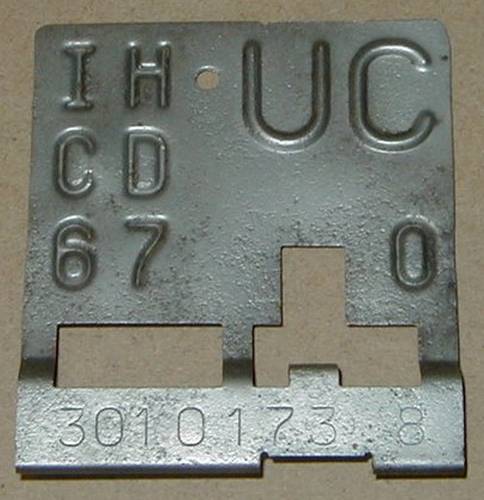
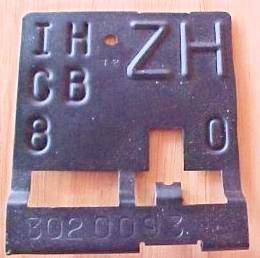
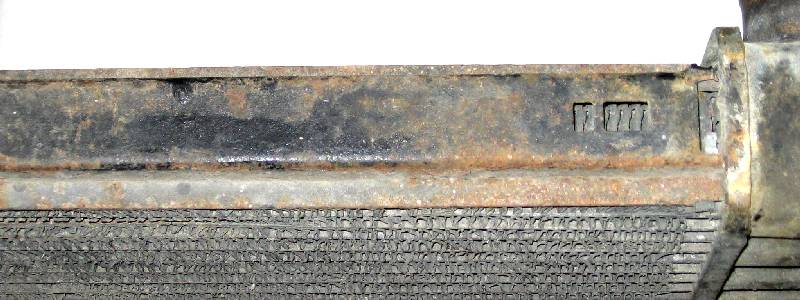
| 1969 2-Row Core Top Plate | 1968 3-Row Core Top Plate | |
|
|
| C R G | CRG Reports | Exterior | Engine | 1967 Model ID |
| Numbers Decode | General Info | Interior | Transmission | 1968 Model ID |
| Drivetrain Decode | Options | Underhood | Chassis | 1969 Model ID |
CRG Research Report - © 2004-2025, Camaro Research Group
1967-69 Camaro Cooling Systems
(including radiator and fan usage)
| Reviewed by the CRG Last Edit: 19-Jan-2023 Previous Edits: 26-Oct-2018, 11-Nov-2017, 19-Sep-2014, 15-Oct-2011, 04-Apr-2008, 24-Feb-2007 Original Release: 06-May-2004 |
All first-generation Camaro radiators were manufactured by the Harrison Radiator Division of GM and were of the cross-flow design type (as opposed to earlier vertical flow designs). Hot coolant from the engine enters the upper left-hand side of the radiator and is cooled as it passes through the radiator core, exiting the lower right-hand side into the waterpump (RH and LH as observed from the driver's position).
The basic cooling system design is robust and with proper maintenance, will last for years. See JohnZ's Cooling Basics for practical information about the proper functions of the components and system.
Radiators for cars with automatic transmission included a transmission oil cooler in the passenger side end tank; manual transmission radiators did not have this provision. The fin spacing is also smaller for automatic radiators (smaller fin spacing increased the radiator's heat rejection capability) to compensate for the increased heat input from the automatic transmission. (Note that radiators sold for service use are often generic and include the transmission cooler provision even for manual transmission cars.)
A heavy-duty radiator was available by ordering either of two options. Regular Production Option (RPO) V01 was the heavy-duty radiator option and was available with all engines except the Z28 or big block engines. All vehicles optioned with air conditioning (RPO C60) also received a HD radiator.
Axle ratio did not affect the radiator usage with one (unverified) exception. In the April 1 1969 revision of the dealer ordering information, it states that Positraction Rear Axles: Ratios 3.73 or 4.10 without Special Performance Package (Z28) or 396 engine "also includes HD radiator" and the MSRP is $56.90. This means that a SS350 (or L65 or 307) with 3.73 or 4.10 gears would automatically get the V01 radiator. This would also apply to COPO 427 cars (and the higher price showed up on some later COPO window stickers), but they already received a 4 core radiator as part of the COPO package.
On all 1967-9 L6 cars, adding RPO V01 or AC resulted in use of a radiator that differed from the standard part only by the use of smaller fin spacing.
For 1967 and 1968 small blocks, adding V01 or AC increased the radiator from a 2-row core to a 3-row core (1.98-inches thick). The V01 or AC radiators for the 67-68 L30 and L48 engines also received a wider 23-inch wide 3-row core. But in late 68, the AC or V01 radiators for L30 and L48 engines changed to a 21-inch core instead of a 23-inch core. We don't know the reason for this application change, but it was consistent with the upcoming 69 usage.
For 1967 big block engines, AC was not a factor in radiator selection since the SS396 was not available with AC in 1967. For 1968 big blocks, AC was an available option for the L35 and L34 engines and increased the radiator from a 3 core to a 4 core (2.70 inches thick). Note that this was a straight neck radiator, unlike the 69 curved neck radiators that used the same broadcast code.
For 1969, all small block radiator cores were 21-inches wide and all big block cores were 23-inches wide. On 1969 small-block engines, adding V01 or AC increased the size of the radiator core from 2-rows to 3-rows. Addition of AC to 1969 big-block engines increased the number of radiator core rows from 3 to 4 and added a curved inlet neck in order clear the 1969 AC components. 1969 COPO 427's (see CRG COPO Research Report) also used this same curved-neck 396/AC 4-row core radiator - eliminating the need for the assembly plant to stock a straight-neck 4-row in 69.
If there was a production shortage (a relatively infrequent event), a larger capacity radiator would be substituted.
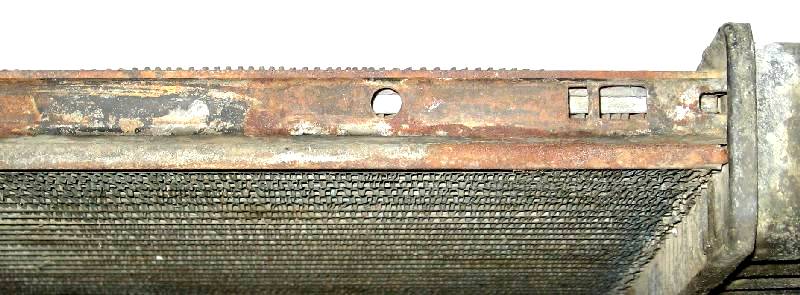
The top and bottom plates of the original radiator core for 2, 3, and 4 cored radiators have a unique hole pattern (the top and bottom plates are the same). Research at Harrison Radiator by Tom DeWitt has shown that the adjacent rectangular and square holes near the ends of the top and bottom plates were used by Harrison to hang the assembled radiators on their paint hooks. Most replacement cores do not have these holes. Below are two pictures of original radiator top plates showing the hole pattern.
| 1969 2-Row Core Top Plate | 1968 3-Row Core Top Plate | |
|
|
|
 |
|
|
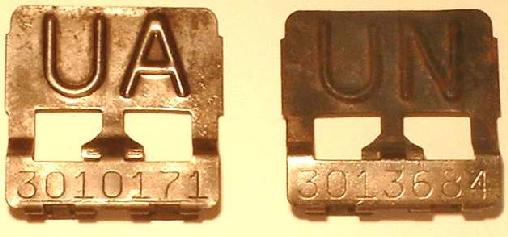
The 1967 tags just had the broadcast code and the part number on it.
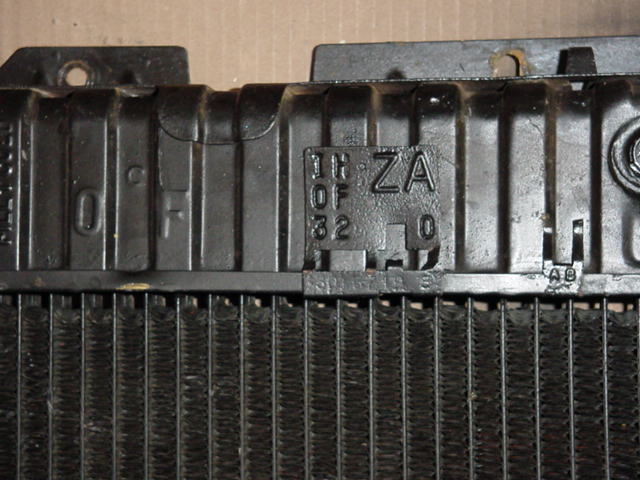
The 1968-1969 version of the radiator tag was larger than the 1967 tag with added information. The 68-69 tags have codes for the radiator end tanks in a smaller font next to the broadcast code. Beneath the tank codes is a 1 or 2 digit number that identifies the radiator core assembly to be used in that radiator. To the right of the core assembly number is the letter O, R, S, or nothing. The meaning of this letter is unknown. The extra number stamped on the bottom edge after the part number appears to be the year of manufacture. (It's believed to be the calendar year, not the model year, but there is some conflicting data.)
The end tank codes were used by the radiator assembly plant to identify the different tank designs and use them in the correct radiator assembly. The month code (letters A through M format, excluding I) is stamped on the RH end tank between the letters of the tank code. The tank codes and applications are shown in the table below.
A 1969 small block automatic transmission radiator tag in the installed position on the radiator is shown below; the tag tells us that the ZA radiator should have IH and OF end tanks and a #32 core. To the left of the tag is the OF tank code and between the O and the F is the month code, a C (for March). To the right of the tag is the clip to hold the overflow hose from the radiator cap.
 |
| Side | Year | Application | Tank Code |
|---|---|---|---|
| Left Side | 67-69 | L6 and SB | IH |
| 67-69 | BB except 69 4-row core | IL | |
| 69 | 4 core BB (curved neck) | IO | |
| Right Side | 67-68 | L6 and SB manual | OD |
| 69 | L6 and SB manual | CB | |
| 67-69 | L6 and SB auto (exc 67-68 L30/L48 w/ V01 or AC) |
OF | |
| 67-68 | L30/L48 auto w/ V01 or AC - 23" | OG | |
| 69 | LF7/L14 auto w/ V01 or AC | ||
| 67-68 | BB manual | OL | |
| 67-68 | BB auto | OM | |
| 69 | BB manual | OO | |
| 69 | BB auto | CH | |
Table cells colored in blue denote verified data (via cars or broadcast sheets), while the data in uncolored cells come from GM documentation. Cells colored in yellow denote assumed data based on GM documentation that suggests the listed usage. We would appreciate help with increasing the number of table cells that are confirmed via data from original cars.
In several applications, radiator usage changed during the production year. Both radiator codes are noted in the table with a reference to early or late production.
| 1967 | Manual Transmission | Automatic Transmission | |||||||||
|---|---|---|---|---|---|---|---|---|---|---|---|
| Engine | Broadcast Code |
Part No. | Core Rows |
Core Width (in.) |
Fin Spac- ing (in.) |
Broadcast Code |
Part No. | Core Rows |
Core Width (in.) |
Fin Spac- ing (in.) |
|
| L26 | UC | 3010173 | 2 | 21 | 0.28 | UD | 3010174 | 2 | 21 | 0.25 | |
| L26 HD | UE | 3010175 | 2 | 21 | 0.16 | UF | 3010176 | 2 | 21 | 0.16 | |
| L22 | UA | 3010171 | 2 | 21 | 0.22 | UB | 3010172 | 2 | 21 | 0.22 | |
| L22 V01/AC | UE | 3010175 | 2 | 21 | 0.16 | UF | 3010176 | 2 | 21 | 0.16 | |
| LF7 | UG | 3010177 | 2 | 21 | 0.20 | UF | 3010176 | 2 | 21 | 0.16 | |
| LF7 V01/AC | UH | 3010178 | 3 | 21 | 0.16 | UI | 3010179 | 3 | 21 | 0.16 | |
| L30 | UG | 3010177 | 2 | 21 | 0.20 | UF | 3010176 | 2 | 21 | 0.16 | |
| L30 V01/AC | UJ | 3010180 | 3 | 23 | 0.18 | UK | 3010181 | 3 | 23 | 0.18 | |
| L48 | UG | 3010177 | 2 | 21 | 0.20 | UF | 3010176 | 2 | 21 | 0.16 | |
| L48 V01/AC | UJ | 3010180 | 3 | 23 | 0.18 | UK | 3010181 | 3 | 23 | 0.18 | |
| Z28 | UH | 3010178 | 3 | 21 | 0.16 | n/a | n/a | n/a | n/a | n/a | |
| 396 | UN | 3013684 | 3 | 23 | 0.16 | UO | 3013685 | 3 | 23 | 0.16 | |
| 1968 | Manual Transmission | Automatic Transmission | |||||||||
| L26 | UC | 3010173 | 2 | 21 | 0.28 | UD | 3010174 | 2 | 21 | 0.25 | |
| L26 HD | UE | 3010175 | 2 | 21 | 0.16 | UF | 3010176 | 2 | 21 | 0.16 | |
| L22 | UC | 3010173 | 2 | 21 | 0.22 | UB | 3010172 | 2 | 21 | 0.22 | |
| L22 V01/AC | UE | 3010175 | 2 | 21 | 0.16 | UF | 3010176 | 2 | 21 | 0.16 | |
| LF7 | UG | 3010177 | 2 | 21 | 0.20 | UF | 3010176 | 2 | 21 | 0.16 | |
| LF7 V01/AC | UH | 3010178 | 3 | 21 | 0.16 | UI | 3010179 | 3 | 21 | 0.16 | |
| L30 | UG | 3010177 | 2 | 21 | 0.20 | UL | 3016782 | 2 | 21 | 0.18 | |
| L30 AC/HD | UJ* | 3010180 | 3 | 23 | 0.18 | UK* | 3010181 | 3 | 23 | 0.18 | |
| ZB** | 3017132 | 3 | 21 | 0.18 | ZC** | 3017131 | 3 | 21 | 0.18 | ||
| L48 | UG | 3010177 | 2 | 21 | 0.20 | UL | 3016782 | 2 | 21 | 0.18 | |
| L48 V01/AC | UJ* | 3010180 | 3 | 23 | 0.18 | UK | 3010181 | 3 | 23 | 0.18 | |
| ZB** | 3017132 | 3 | 21 | 0.18 | ZC** | 3017131 | 3 | 21 | 0.18 | ||
| Z28 | UH | 3010178 | 3 | 21 | 0.16 | n/a | n/a | n/a | n/a | n/a | |
| 396 | UN | 3013684 | 3 | 23 | 0.16 | UO | 3013685 | 3 | 23 | 0.16 | |
| 396 AC | UY | 3016688 | 4 | 23 | 0.16 | UZ | 3016689 | 4 | 23 | 0.16 | |
| 1969 | Manual Transmission | Automatic Transmission | |||||||||
| L26 | UC | 3010173 | 2 | 21 | 0.28 | UB | 3010172 | 2 | 21 | 0.22 | |
| L26 HD | UE | 3010175 | 2 | 21 | 0.16 | UF | 3010176 | 2 | 21 | 0.16 | |
| L22 | UC | 3010173 | 2 | 21 | 0.28 | UB | 3010172 | 2 | 21 | 0.22 | |
| ZA | 3016719 | 2 | 21 | 0.20 | |||||||
| L22 V01/AC | UE | 3010175 | 2 | 21 | 0.16 | UF | 3010176 | 2 | 21 | 0.16 | |
| L14 | UA | 3010171 | 2 | 21 | 0.22 | ZA* | 3016719 | 2 | 21 | 0.20 | |
| UL** | 3016782 | 2 | 21 | 0.18 | |||||||
| L14 V01/AC | ZB | 3017132 | 3 | 21 | 0.18 | ZC | 3017131 | 3 | 21 | 0.18 | |
| LF7 | UA | 3010171 | 2 | 21 | 0.22 | ZA | 3016719 | 2 | 21 | 0.20 | |
| LF7 V01/AC | UH | 3010178 | 3 | 21 | 0.16 | ZC | 3017131 | 3 | 21 | 0.18 | |
| LM1 | UG | 3010177 | 2 | 21 | 0.20 | UF | 3010176 | 2 | 21 | 0.16 | |
| LM1 V01/AC | UH | 3010178 | 3 | 21 | 0.16 | UI | 3010179 | 3 | 21 | 0.16 | |
| L65 | UG | 3010177 | 2 | 21 | 0.20 | UF | 3010176 | 2 | 21 | 0.16 | |
| L65 V01/AC | UH | 3010178 | 3 | 21 | 0.16 | UI | 3010179 | 3 | 21 | 0.16 | |
| L48 | UG* | 3010177 | 2 | 21 | 0.20 | ZA* | 3016719 | 2 | 21 | 0.20 | |
| ZH** | 3020093 | 2 | 21 | 0.18 | ZI** | tbd | 2 | 21 | tbd | ||
| L48 V01/AC | US | 3014187 | 3 | 21 | 0.20 | UR | 3014186 | 3 | 21 | 0.20 | |
| Z28 | UH | 3010178 | 3 | 21 | 0.16 | n/a | n/a | n/a | n/a | n/a | |
| 396 | ZD | 3017837 | 3 | 23 | 0.16 | ZE | 3017838 | 3 | 23 | 0.16 | |
| 396 AC | UY | 3018624 | 4 | 23 | 0.16 | UZ | 3018623 | 4 | 23 | 0.16 | |
| COPO | UY | 3018624 | 4 | 23 | 0.16 | UZ | 3018623 | 4 | 23 | 0.16 | |
| *early production **later production | Blue is Confirmed Data | ||||||||||
| Yellow is Assumed Data | |||||||||||
Note: GM documentation indicates that the late production 68 L30 & L48 V01/AC radiator changed in width from 23" to 21". GM documention is incorrect on which 21" radiators were used. Several late production 1968 cars with V01/AC have been documented with the 21" ZB 3017132 and ZC 3017131 radiators instead UH and UI listed in GM documentation. The correct usages are listed in the table above.
| Year | Application | Part Number | Notes |
|---|---|---|---|
| 67-68 | SB (except L30/L48 w/ V01 or AC) | 3893812 | |
| 67-68 | L30/L48 w/ V01 or AC | 3893814 | 23 inch |
| 67-68 | BB | 3916637 | |
| 69 | SB | 3938615 | |
| 69 | BB | 3947619 | |
| 67-69 | L6 w/o V01 or AC | no shroud | used shield 3893892 |
| 67-69 | L6 with AC | 3893816 | |
| 67 | L6 with smog w/o AC | ||
| 67-68 | L26/manual with V01 |
The temperature-controlled clutch fan was also available as option K02 on the hydraulic-lifter engines for $15, but only 4712 1967-69 Camaros were ordered with this option. Air conditioning (RPO C60) included the K02 clutch fan as part of the AC package. The V01 HD radiator option did not affect the fan usage.
Out of 400,000 non-AC V8 cars that could have the optional clutch fan ordered, only 1% of them had the option. Even if most of these clutch fans were installed on non-L78 SS cars (not very likely), under 5% of those SS cars would have them. So yes, your SS350 or SS396 (325hp or 350hp), if without AC, likely came with the standard four-blade fixed fan.
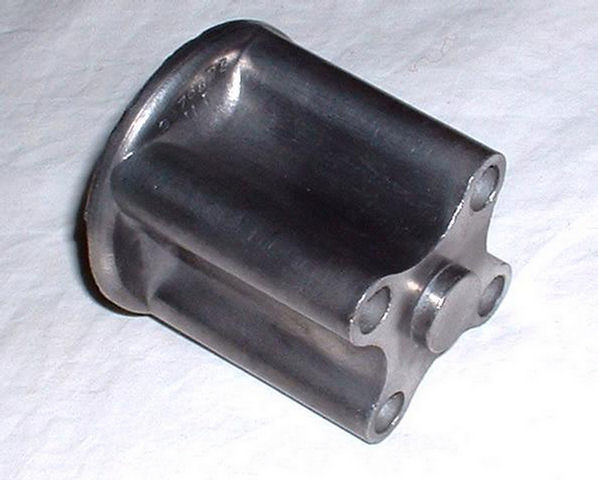
The 1967 and 1968 V8 engines used the short water pump design and the bolt circle diameter to mount the fan on the water pump is 1.75". In 1969, as part of the V8 engine layout standardization, the water pump was changed to the long design and the water pump bolt circle diameter was changed to 2.30".
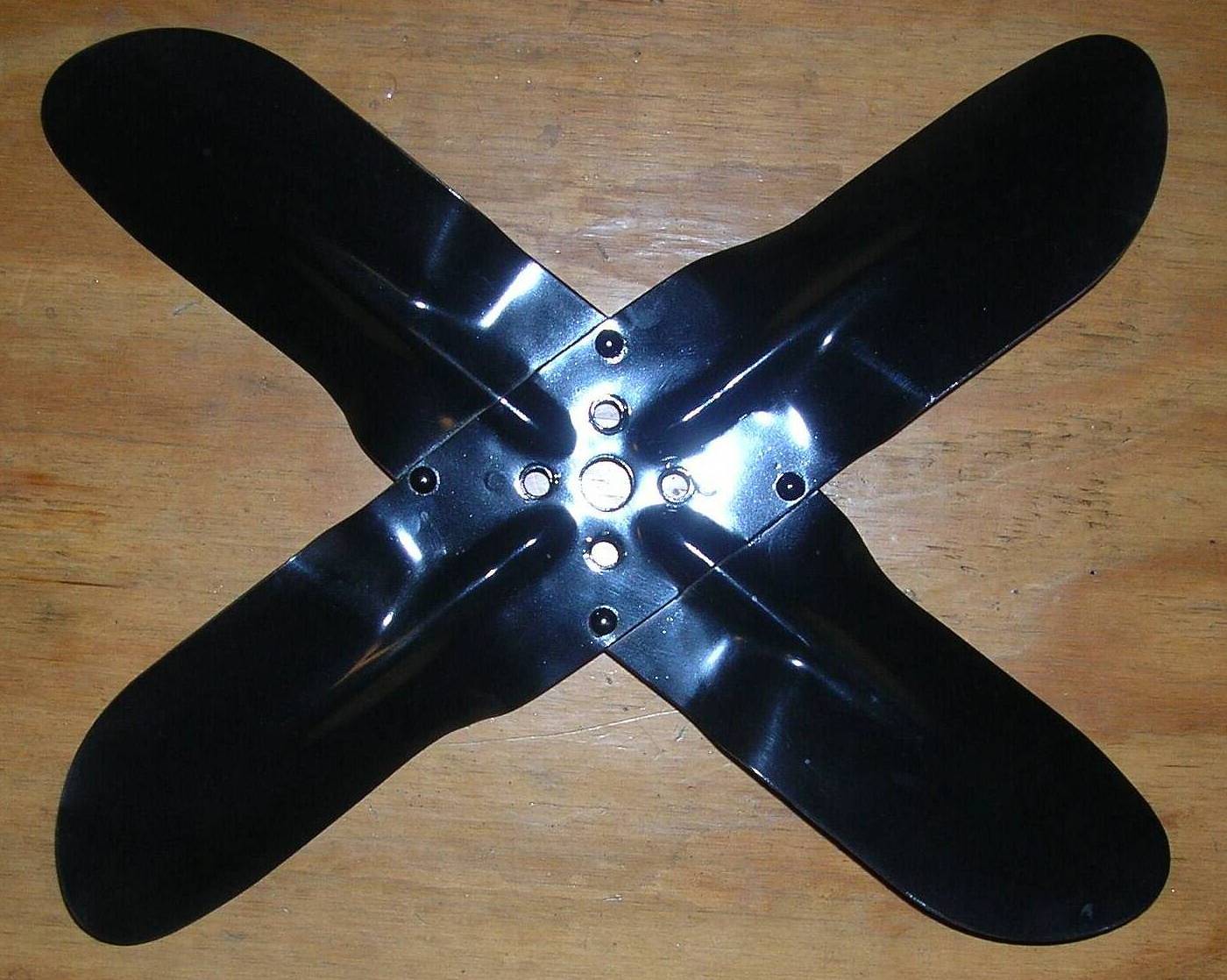
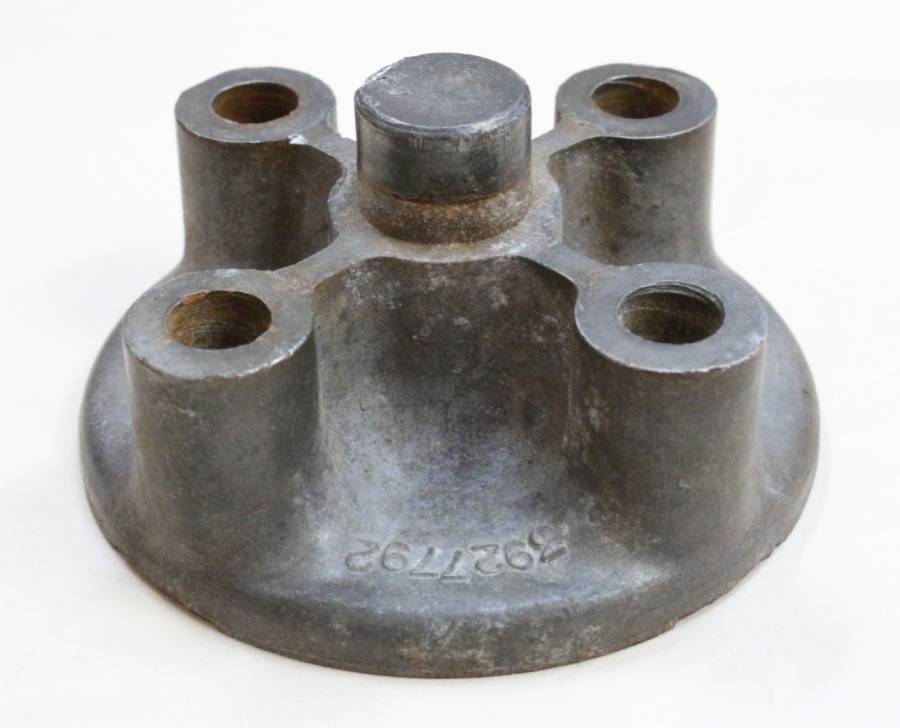
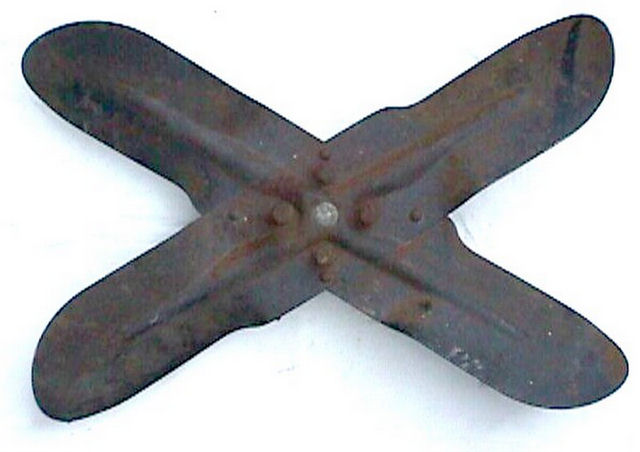
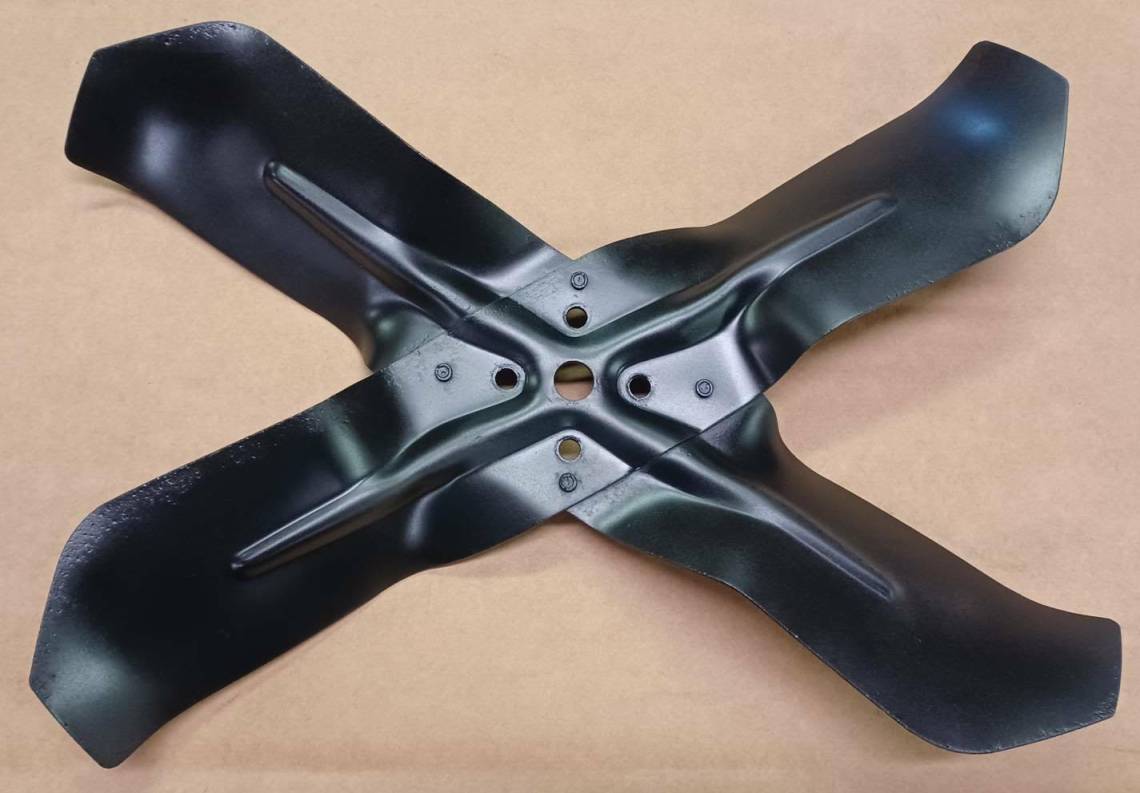
There were a number of different length spacers to mount the fixed four-blade fan to the waterpump, as shown in the table below. The lengths noted are the spacer length and exclude the fan locator / pilot. The 67-68 fan had a flat center whereas the 69 fan had the ribs continuing through the center section, which required the longer locator nib on the 69 spacers.
|
|
|
|
|
|
A variable in the clutch applications is the distance of the fan mounting
surface to the waterpump mounting surface distance. This distance is normally different
between small block and big block applications with the big block clutch
having a shorter shaft to properly position the fan fore-aft relative to the fan shroud.
There were three different clutch suppliers. It is believed that the
redline of the engine was a factor in which clutch was used on an engine.
Schwitzer bar-type fan clutches were dated on the O.D. of the mounting flange with "SC" stamped
at the end of the date code (for Schwitzer Corporation). Delco fan clutches have the
date (Julian date and year) and part number stamped on the waterpump mounting flange
along with Delco and the broadcast code stamped on the face of the clutch. Eaton fan
clutches have "Eaton", the broadcast code, and the date (with a letter for the month, numbers for the day,
and a letter for the year, e.g. E14J is May 14, 69) ink stamped on the clutch face.
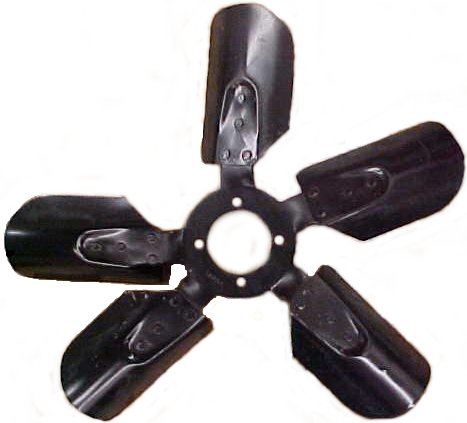
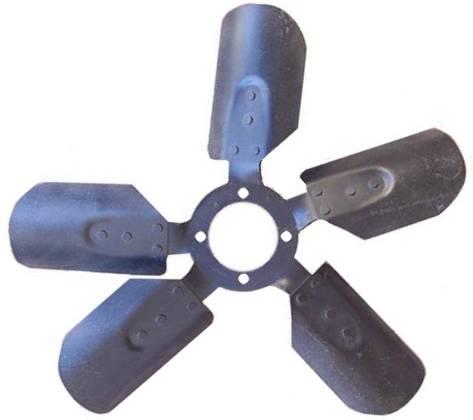
In 1967 and 1968, the clutch fan was 18 inches in diameter, most had five blades (there was limited usage of a seven blade fan, see below), and came in two types:
| 3789562 fan | 3871276 fan | |
|
|
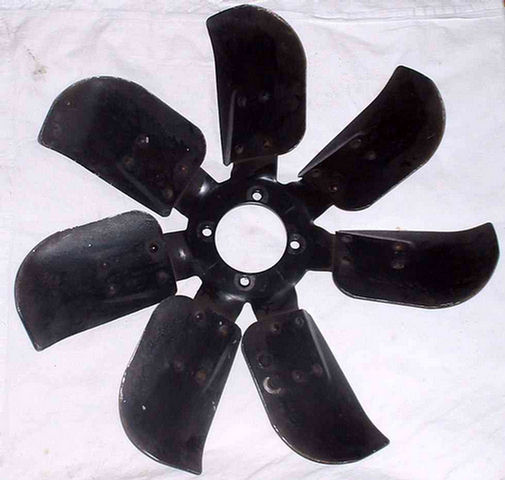
In 1969, the clutched fan changed to a seven-blade
design (still 18 inches in diameter) with aluminum fan blades.
Cars with AC or K02 received the same fans as the 1969 Z28 and L78/COPO
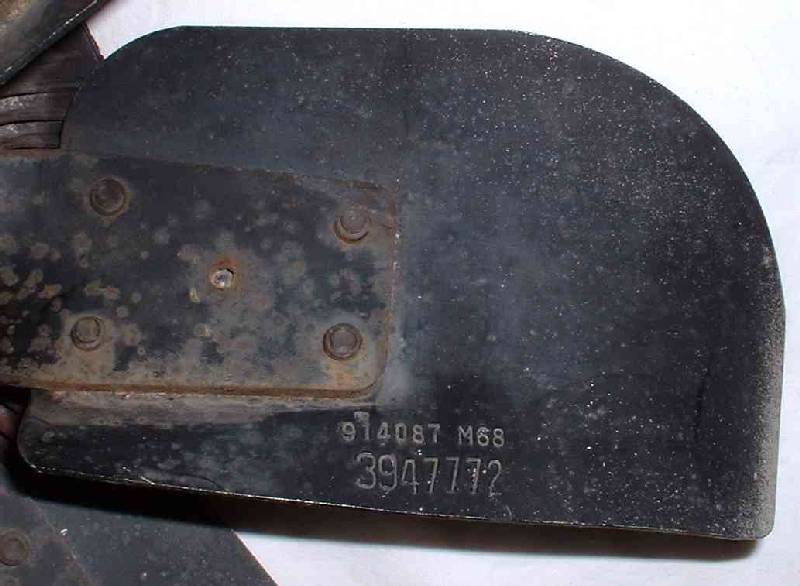
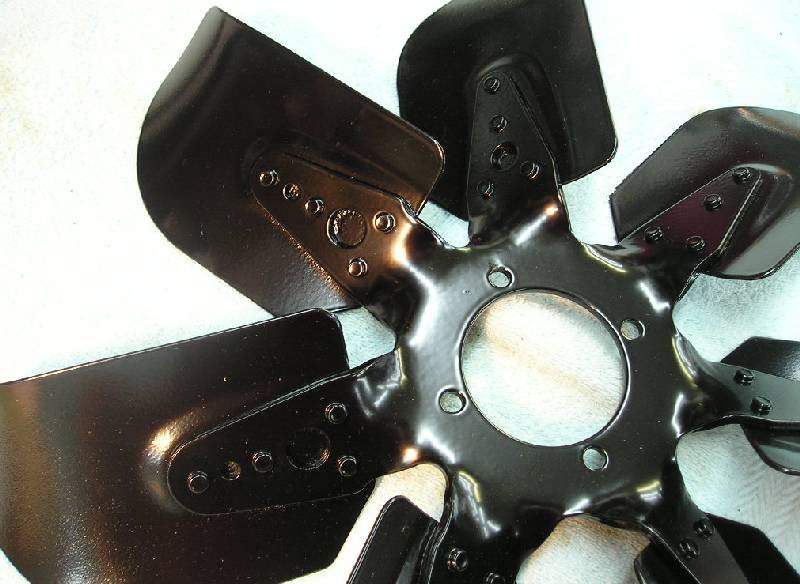
cars. There were two manufacturers of this fan and a mid-year
fan pitch change (2 to 2.25"), yielding four variants of this fan.
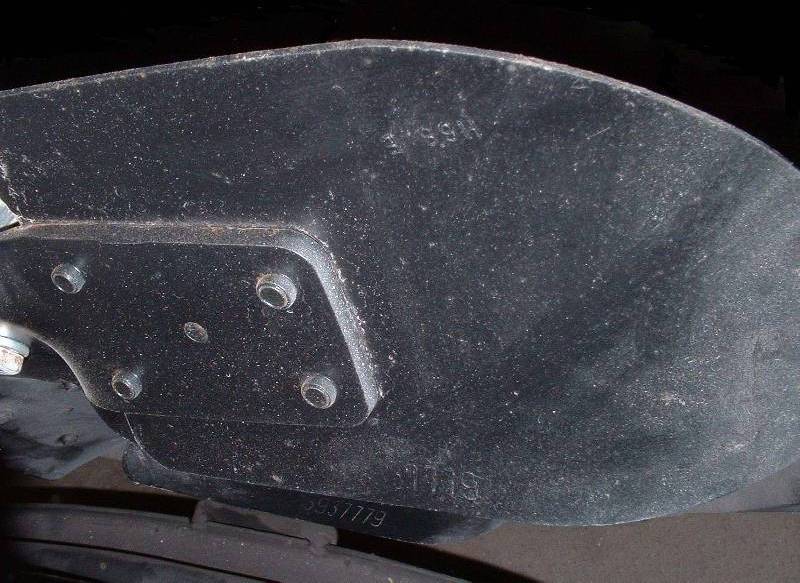
From what has been observed on original cars, the 3947772 fan and the unstamped fan were used interchangeably and with approximately equal usage. As noted above, the 3937779 fan was only used on early 69 cars.
|
 |
| 'Unstamped' Fan | 3937779 Fan Close-up | |
|
|
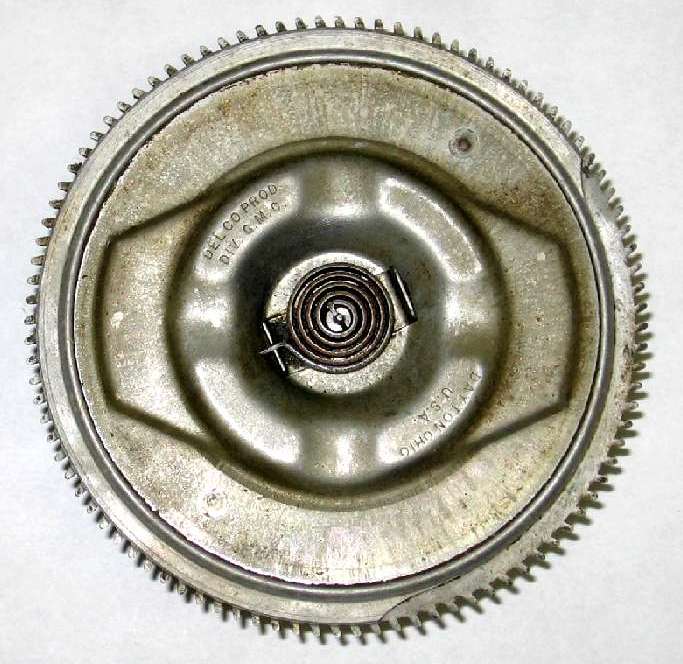
In 1969, 3 different fan clutches were used for C60 (AC) and RPO K02 cars (except 396). The AIM lists the part numbers as 3937780, 3937782, and 4939899; the service part was 3937781. These clutches have been observed to be Delco clutches, stamped with the broadcast code of CH. The 4939899 clutch has a mounting face to mounting face distance of 1.8" and has an outside diameter of 6 inches.
The L35/L34 396 cars with C60 or K02 used a 3946049 clutch with a ink-stamped broadcast code of CI. (The AIM shows this clutch was also used for 350 ci engines, but that is not what has been observed in cars. It may have also been used with solid lifter cars.)
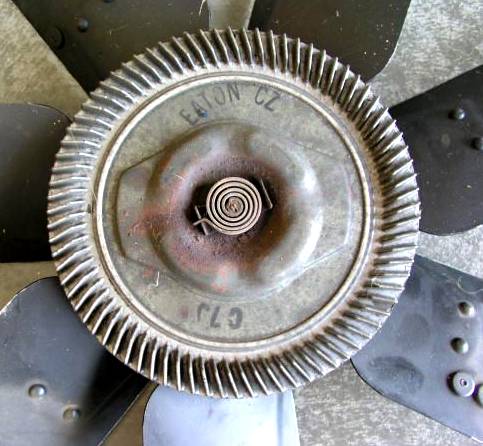
The L78/COPO used part number 3946050 (stamped CZ) and the Z28 used 3946804 (stamped CV), both were Eaton-supplied units with an OD of 7 1/4".
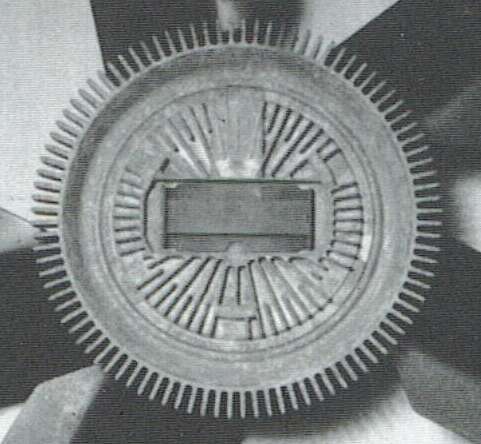
| 1968 Z28 Schwitzer Fan Clutch | 1969 Delco Fan Clutch | 1969 Eaton Fan Clutch (CZ code) | ||
|
|
|
You can help improve future revisions of this report. We would appreciate verification of unconfirmed radiator usages via data from original radiators and cars (or via broadcast sheets). We also would appreciate digital photos of original radiator tags. The tank codes on the 1968-1969 tags will help verify the radiator tank usages.
|


|