| C R G | CRG Reports | Exterior | Engine | 1967 Model ID |
| Numbers Decode | General Info | Interior | Transmission | 1968 Model ID |
| Drivetrain Decode | Options | Underhood | Chassis | 1969 Model ID |
CRG Research Report - © 2026, Camaro Research Group
1967 Camaro Indy 500 Pace Cars
Primary Authors - Bryon Miller, Kurt Sonen, and Daniel Coffman|
Reviewed by the CRG Last Edit: 03-Nov-2026 Previous Edits: Original Release: 03-Nov-2026 |
|
|
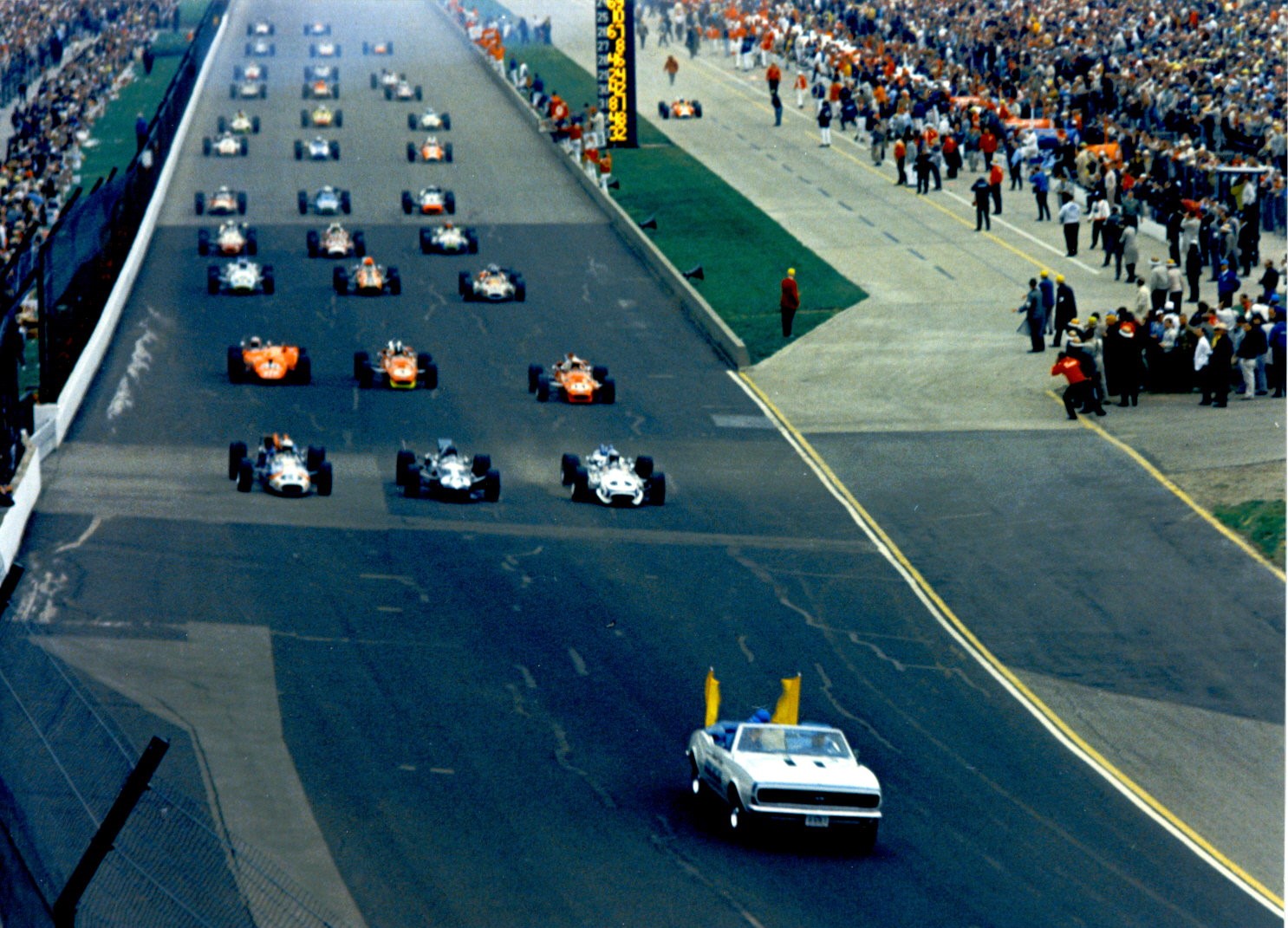
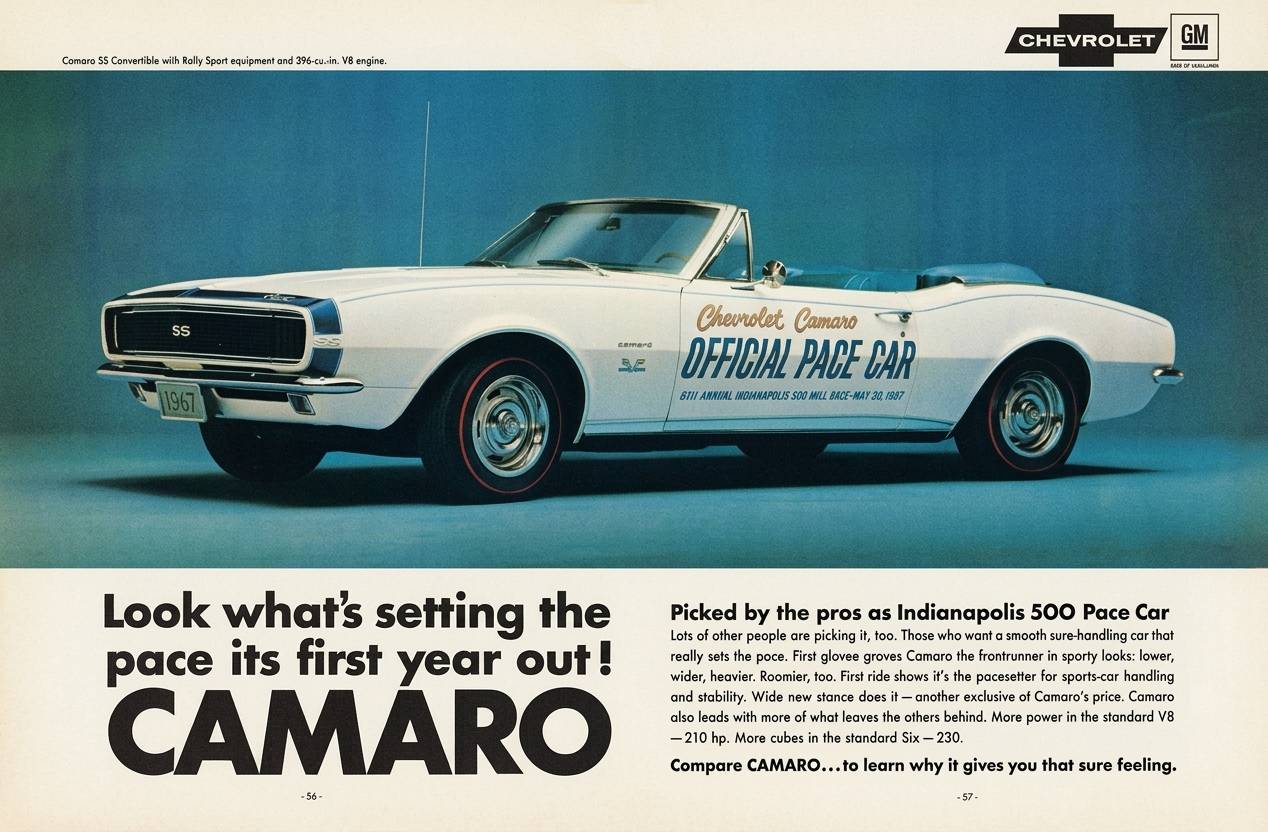
The new 1967 Chevrolet Camaro was chosen as the official pace car for the 51st running of the Indianapolis 500 in May 1967. Newspaper articles documented the announcement on February 18, 1967, which was jointly released by Speedway President Tony Hulman and E. M. "Pete" Estes, vice-president of General Motors and general manager of the Chevrolet Motor Division. This marked the first time a Chevrolet had paced the race since a Bel Air convertible did so in 1955.
While the selection provided excellent public relations exposure for the new Camaro, it required extensive coordination by Chevrolet to host various race-associated events and supply the necessary fleet of vehicles. The race itself ultimately spanned two days. Although it started on Tuesday, May 30, the race was red-flagged on lap 19 due to rain. It resumed and concluded the following day, Wednesday, May 31. (Note: At the time, the race was held on May 30 regardless of the day of the week; it was not until 1974 that the Indy 500 was permanently moved to the Sunday of Memorial Day weekend.)
|
|
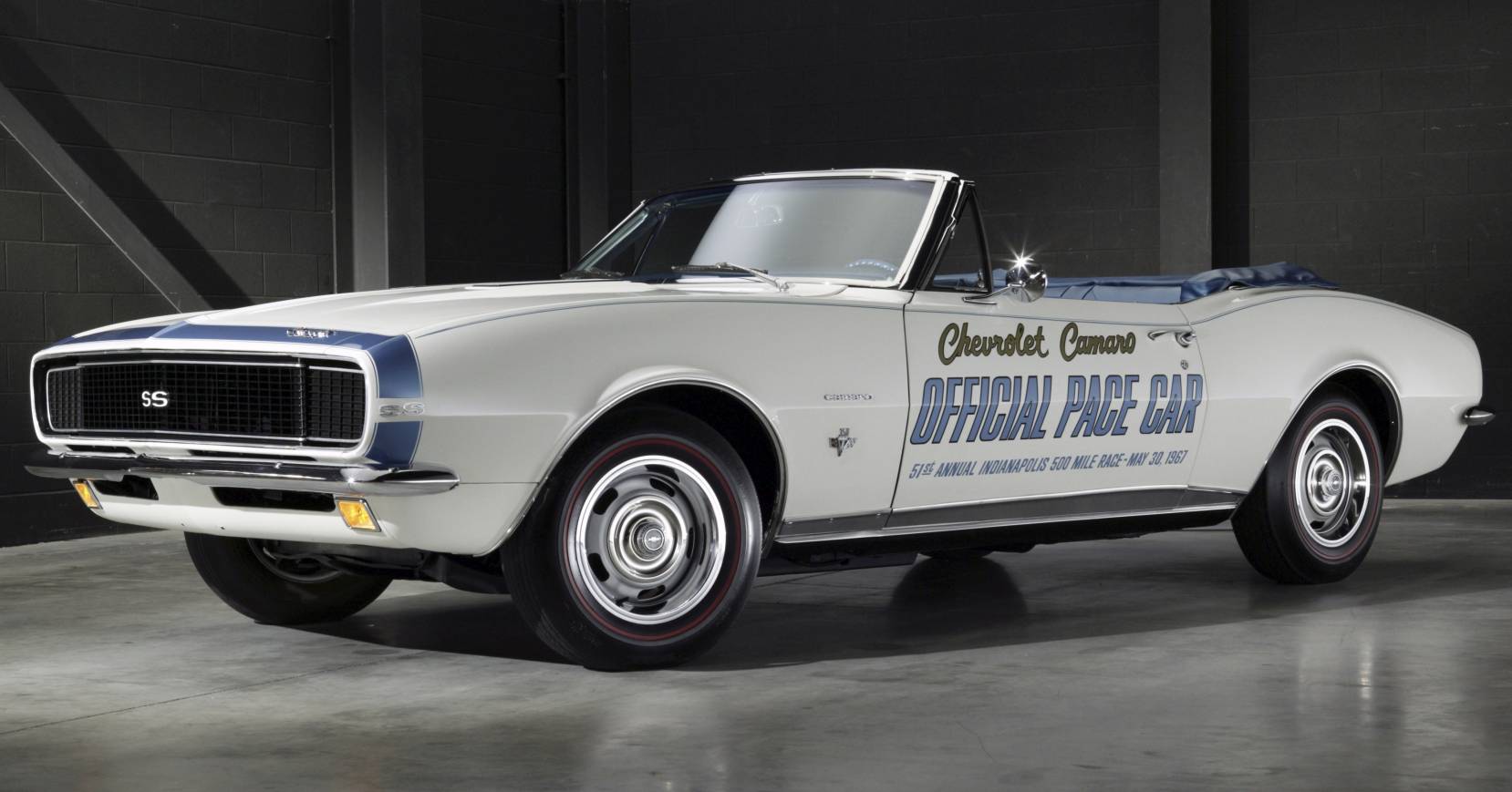
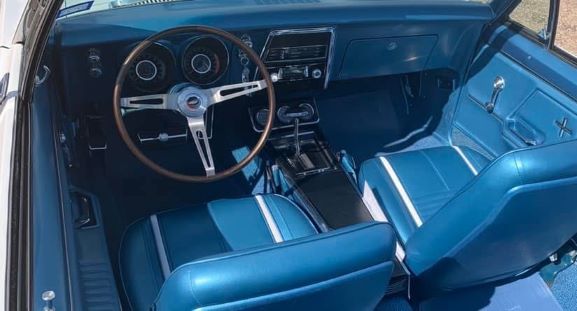
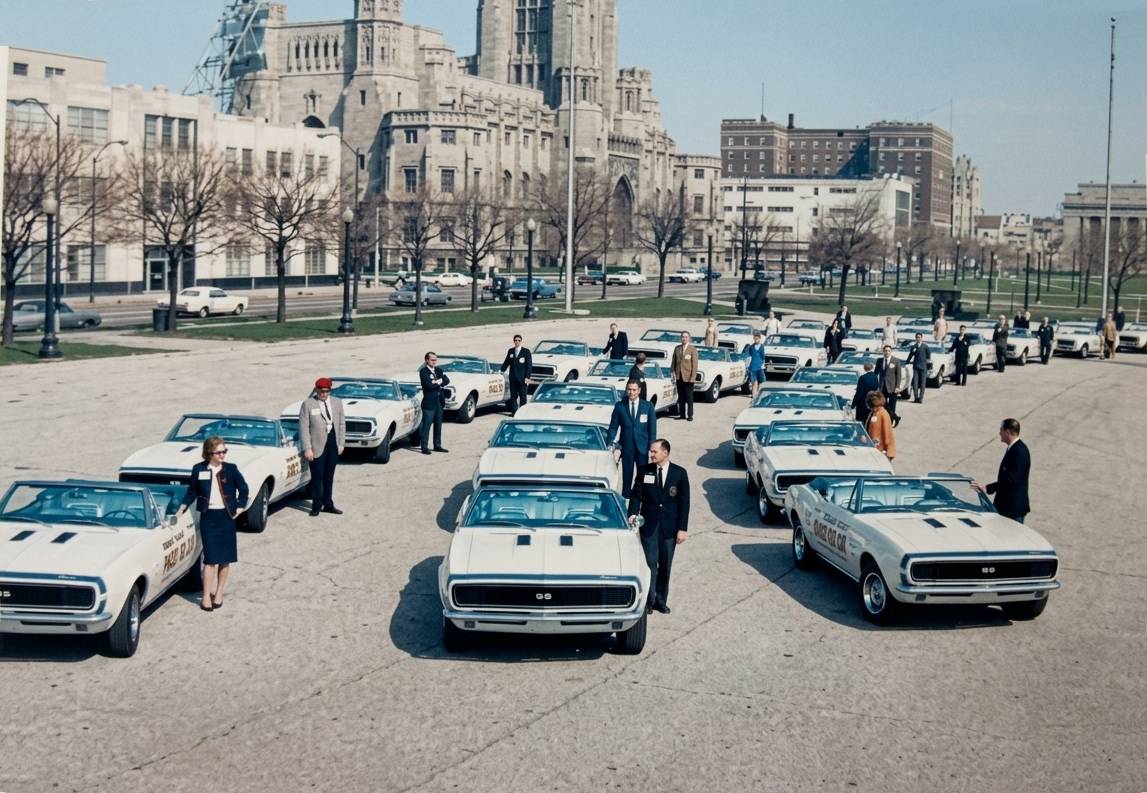
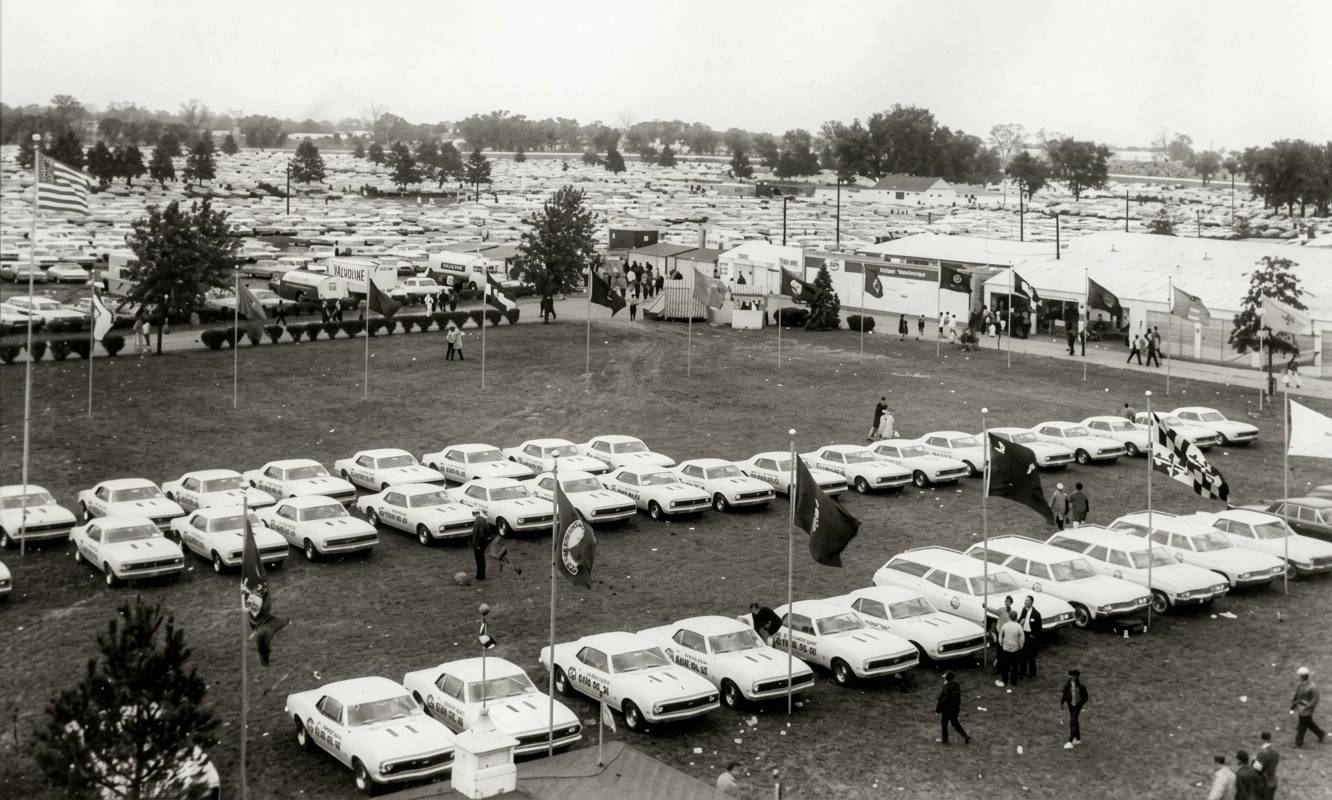
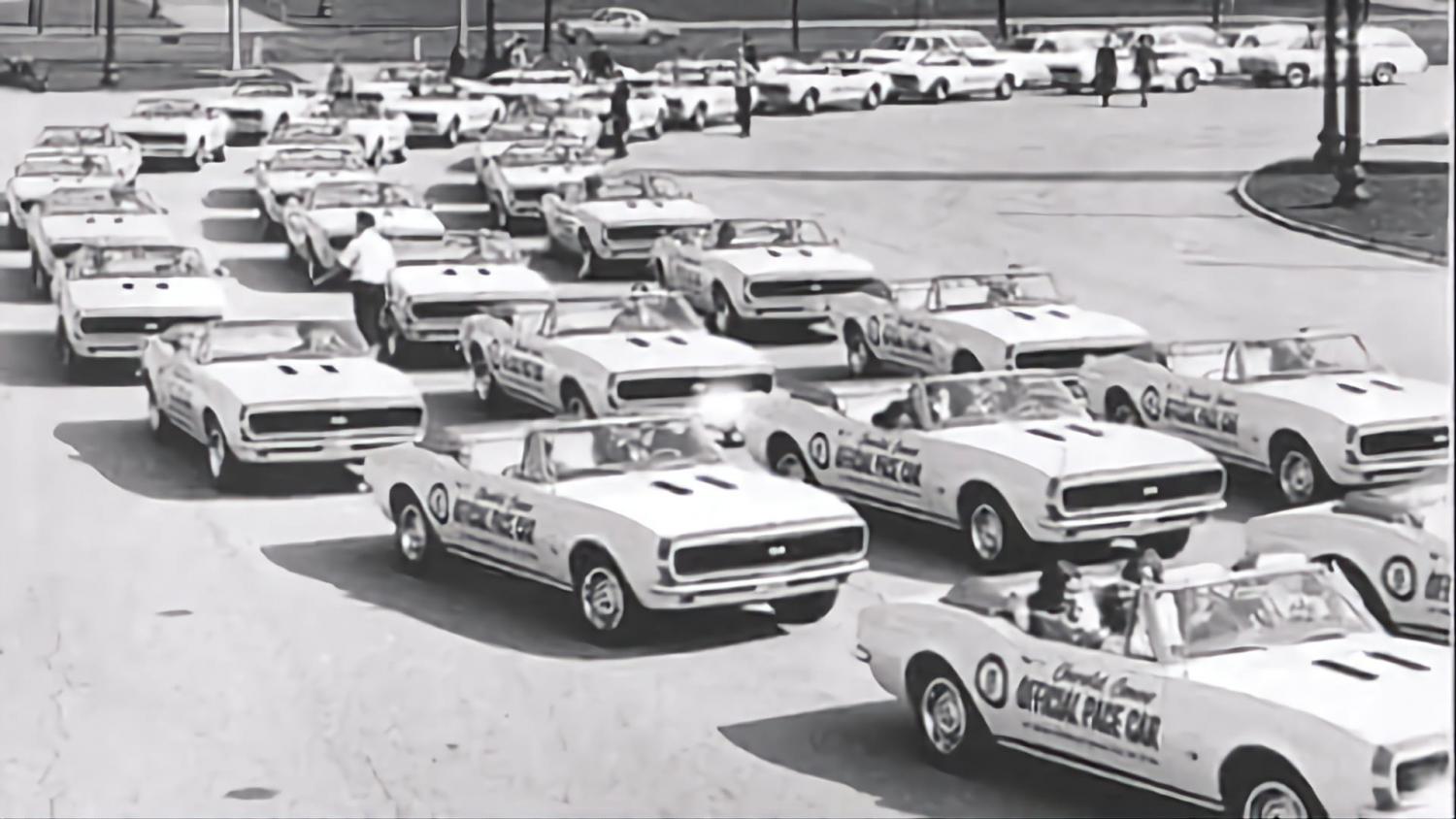
Chevrolet provided a fleet of approximately 120 vehicles, including more than 80 Camaros along with station wagons, trucks, and Impalas. All of the Camaros were RS/SS convertibles featuring white exteriors, painted blue nose stripes, and bright blue custom interiors (trim code 732). Three of these Camaros were specifically modified to pace the actual race. The remainder of the fleet served in Festival parades, functioned as courtesy vehicles for the media and GM officials, or served as Speedway vehicles. These replica cars were ordered through the Chevrolet Central Office and delivered to one of three Indianapolis dealerships: Nankivell Chevrolet, Bill Kuhn Chevrolet, or Johnson Chevrolet. These dealerships handled standard pre-delivery inspections and applied the various decals.
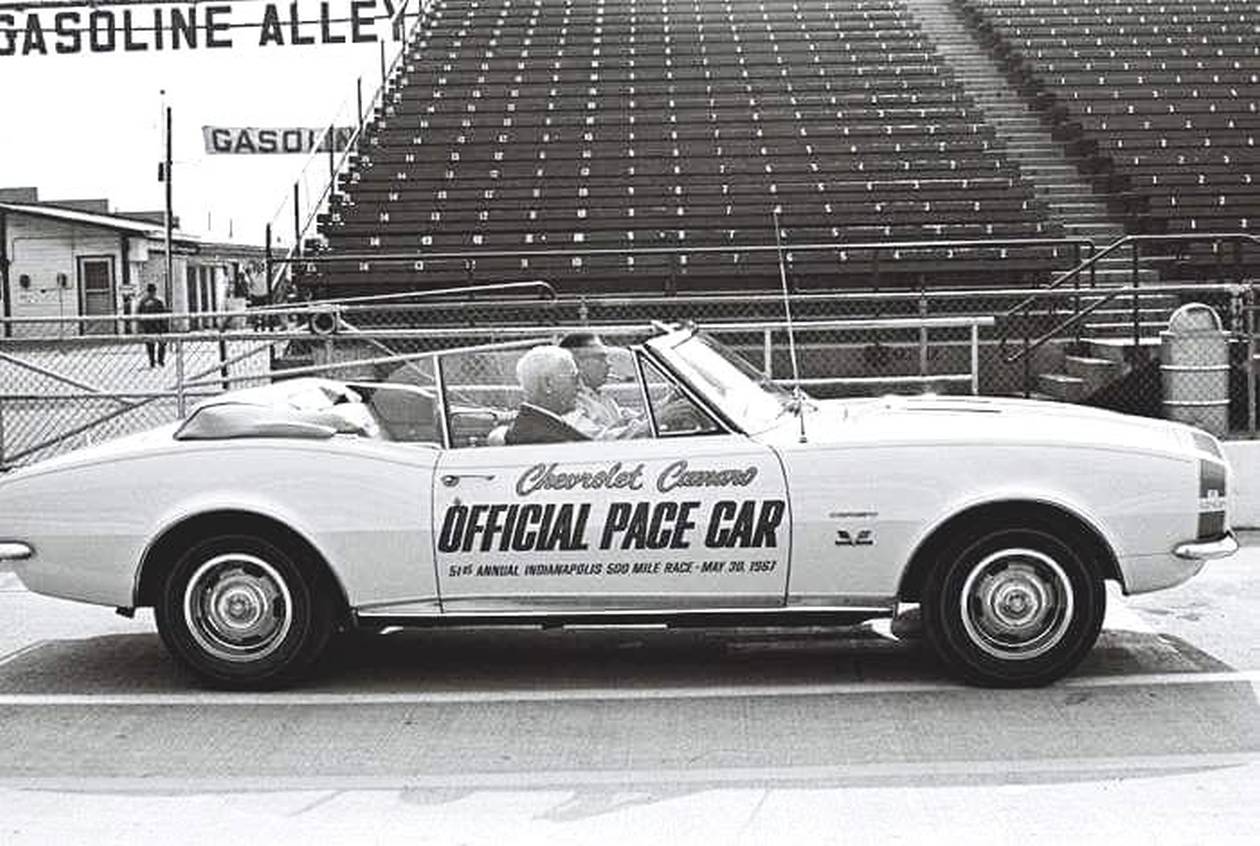
Special door decals were developed and supplied by Chevrolet’s advertising agency, Campbell-Ewald. The decals read "Chevrolet Camaro Official Pace Car 51st Annual Indianapolis 500 Mile Race – May 30, 1967". The decals were only installed on the Camaros at the event. Because the decals were sourced directly by Campbell-Ewald, they lacked a GM part number and were never available as service parts.
The Official Pace Cars
|
|
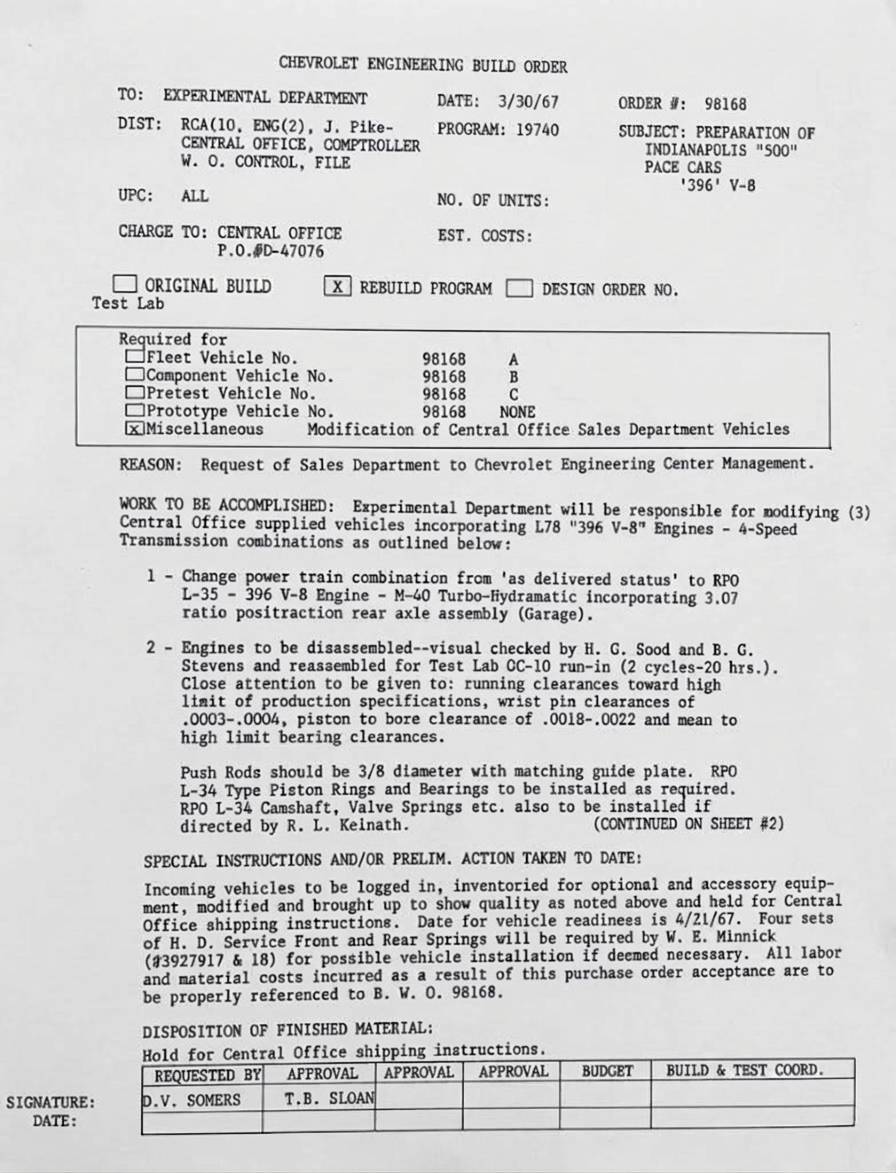
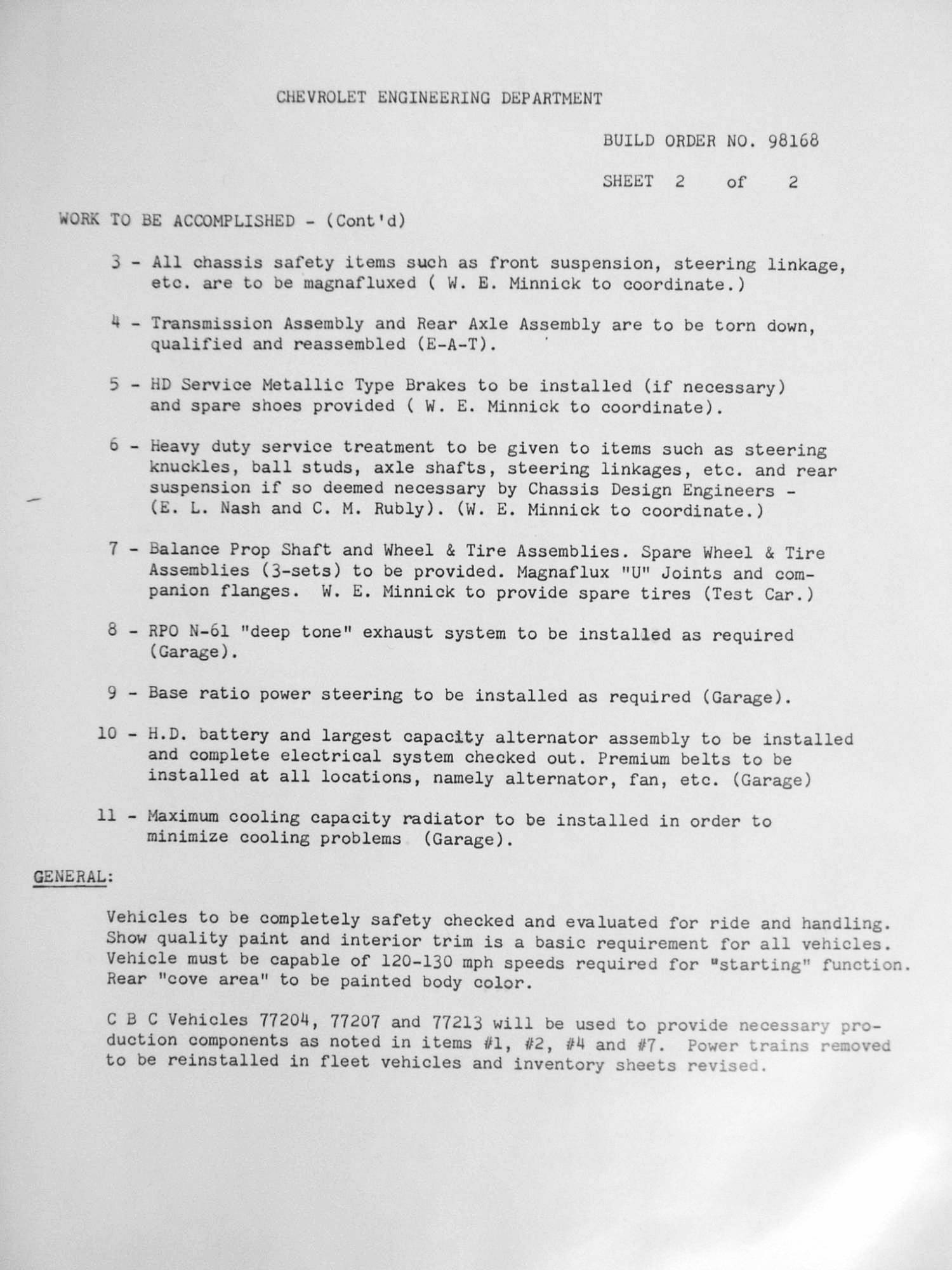
Three official Camaro convertible pace cars were built. Two were designated as the actual race pace cars, while the third was intended for the race winner. All three were assembled at the Norwood plant and sent to Chevrolet Engineering for modifications. These Camaros were originally equipped with L78 396ci/375hp engines—making them the first Camaros to receive the L78—and Muncie M21 close-ratio 4-speed manual transmissions. However, Chevrolet Engineering replaced these drivetrains with L35 396ci/325hp engines mated to Turbo Hydra-Matic 400 3-speed automatic transmissions. The modifications were detailed under Engineering Build Order #98168.
|
|
The official pace cars received show-quality paint and their rear tail panels were painted body color (unlike regular-production big-block Camaros, which featured blacked-out tail panels). They were also equipped with sturdy, chrome brackets designed to hold metal flagpoles; these brackets had to withstand wind resistance at speeds exceeding 100 mph. Each car required two sets of flags: one yellow and one green.
The three pace cars had the following options:

|
|
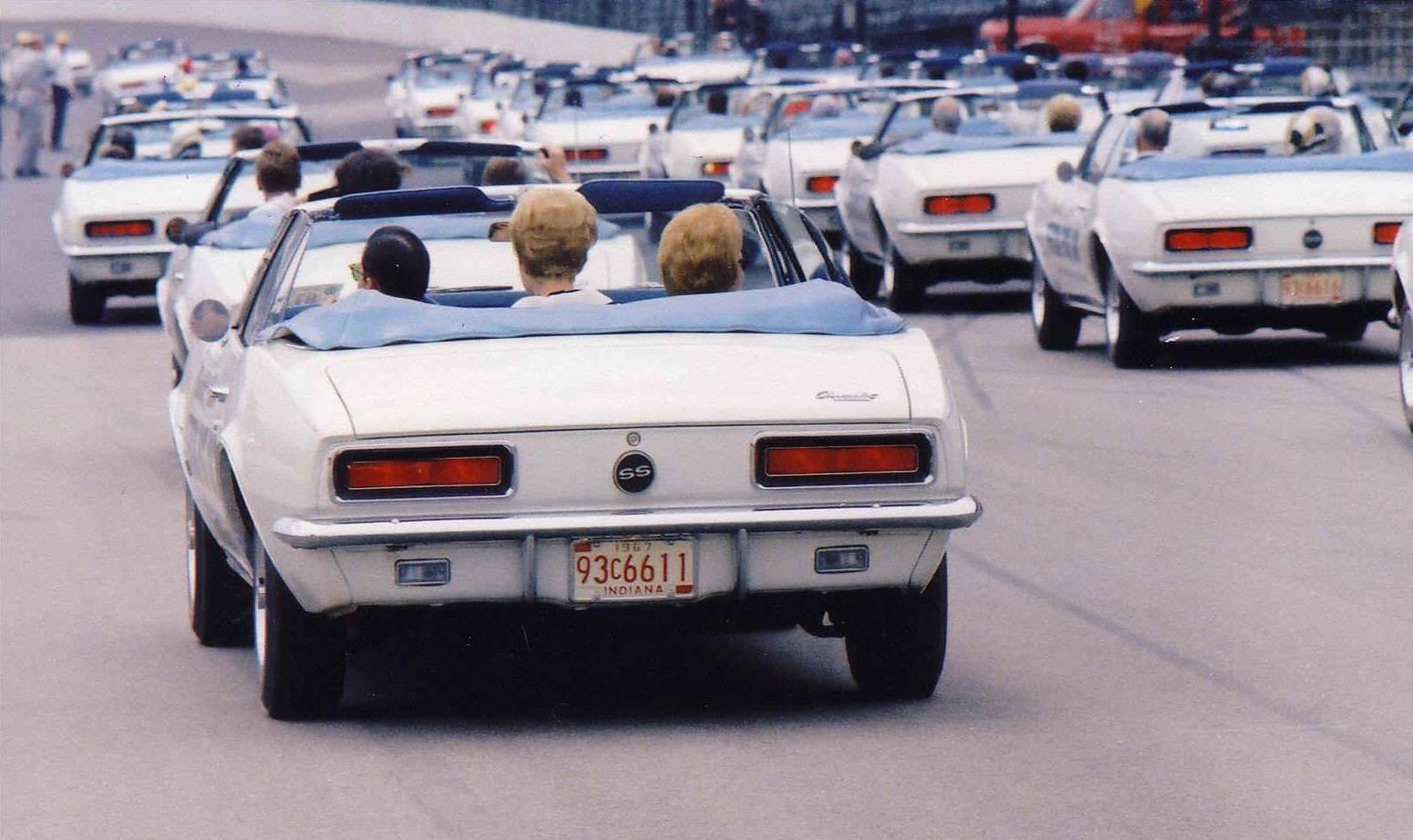
There were 43 Camaro pace car replicas for the ‘500’ Festival Committee along with five 9-passenger Impala station wagons. These vehicles were for festival duties, including the 500 Festival parade in downtown Indianapolis and track laps on Opening Day and on Race Day. The festival cars carried the Queen and Queen candidates and celebrities. All of the Festival cars featured a gold and black Indianapolis 500 Festival decal on the rear quarters. This decal was used for several years, including 1967 and 1969. All of the Festival Camaros were ordered identically as RS/SS350 models with automatic transmissions, power disc brakes, and power steering. All carried an 03C build date, the third week of March 1967.
There were also at least seven IPC’s that were used to pull trailers with past Indy 500-winning race cars on them in the festival parade, though these were not official festival cars.
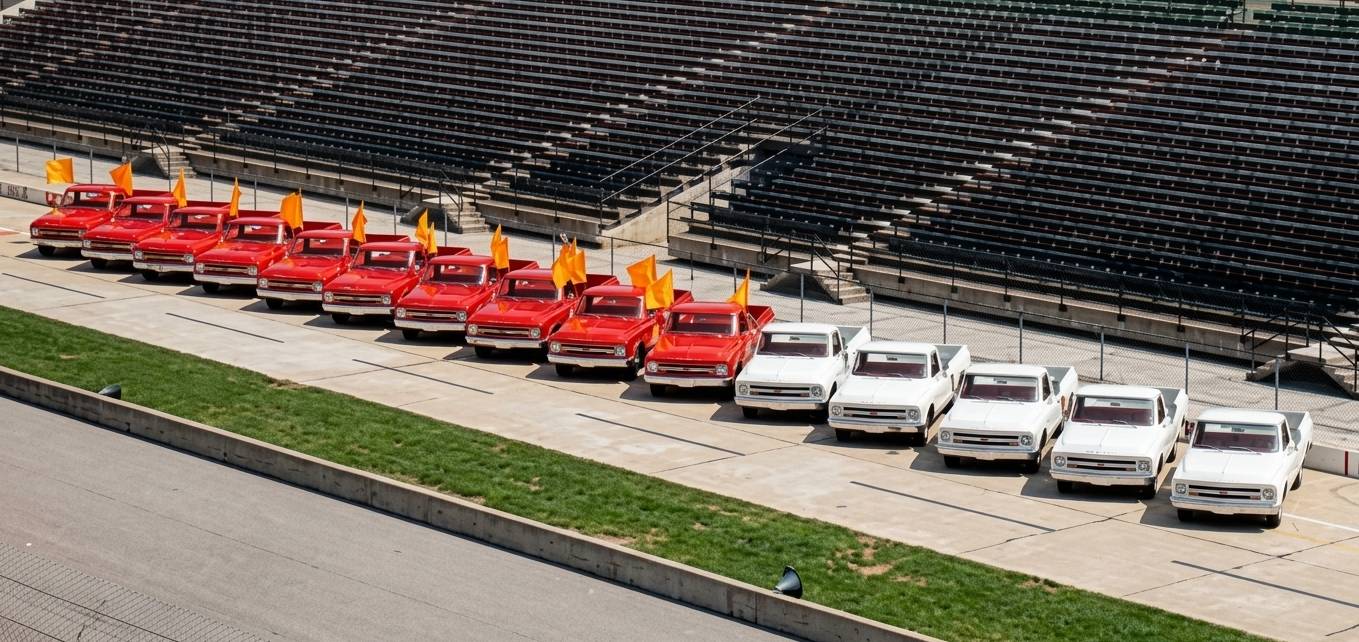
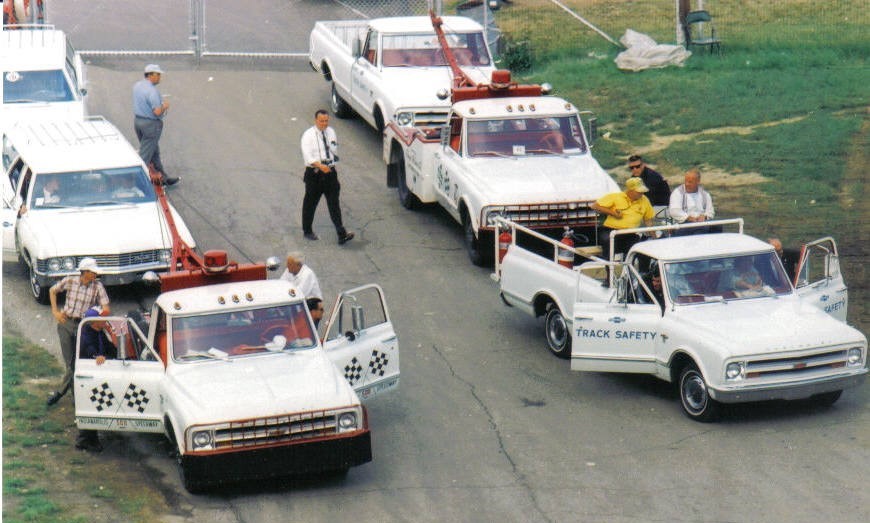
Speedway VehiclesAn additional ten Camaro replicas were ordered for use as Speedway staff vehicles. These were built identically to the 43 Festival cars. Chevrolet also provided other support vehicles for Speedway use, including three 9-passenger station wagons (painted white), ten 3/4-ton pickup trucks (painted red and used for fire trucks) and five 1/2-ton pickup trucks (painted white and used as safety vehicles).
|
|
Chevrolet provided 40 courtesy vehicles for corporate VIPs, members of the press, and race officials. This group initially included approximately 25 Camaro pace car replicas, 10 Impala sedans or coupes, and five station wagons. But more cars were needed and so more Camaros were added to the fleet - some of these cars were sourced from local dealers and some were sourced by the regional zone office. Consequently, these cars featured a diverse mix of drivetrains, including both SS350 and SS396 variants backed by either automatic or manual transmissions. Additionally, a few Brass Hat Camaros were not RS/SS convertibles.
A subset of the Brass Hat fleet consisted of an unknown number of "Blue Top" cars. Reputedly ordered for Indianapolis Zone employees, these convertibles featured blue soft tops and carried an O-4 paint code on their Fisher Body trim tags.
The defining feature of a 1967 Indy Pace Car is a blue nose stripe and matching pinstripes, designed to complement the 732-Z bright blue deluxe interior. Regular production Camaros were limited to either white or black nose stripes, depending on the exterior color.
|
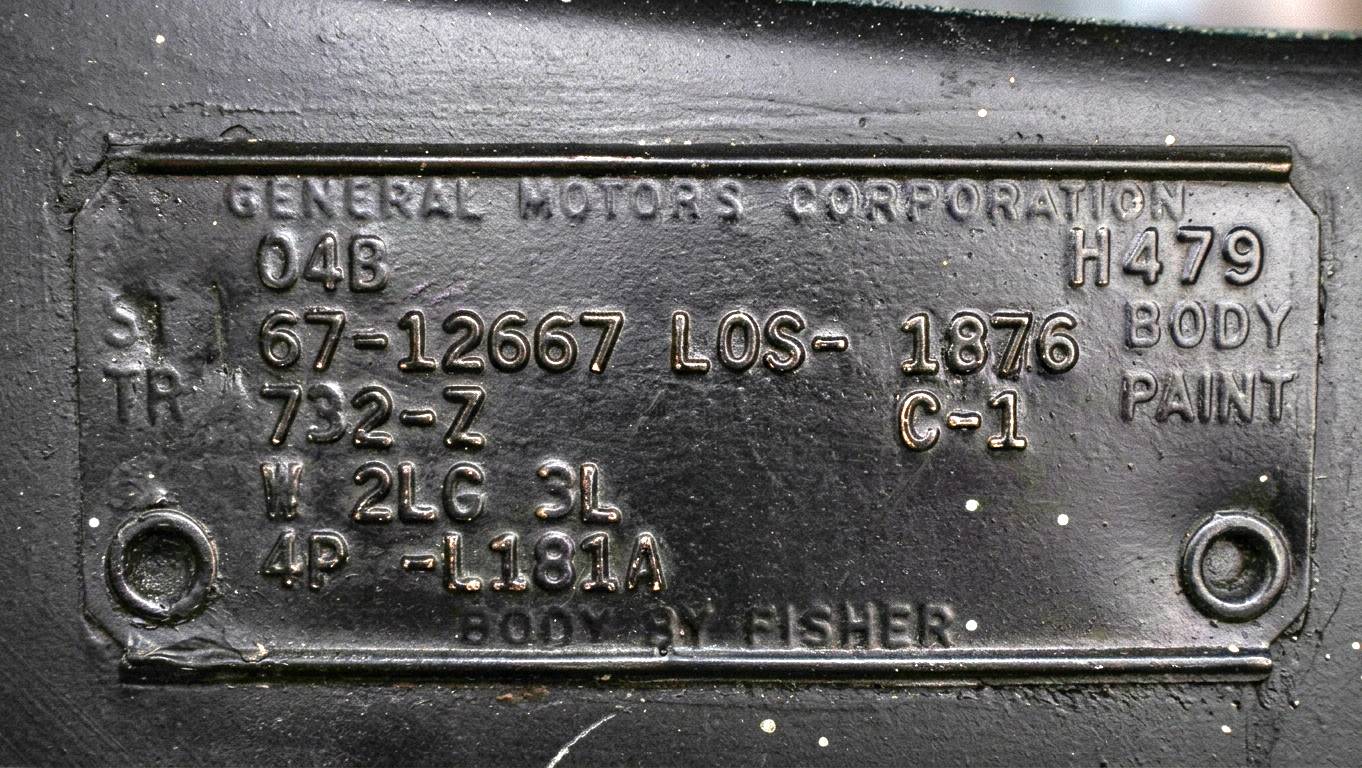
The blue-striped Camaros were ordered using the Fleet and Special Order (F&SO) system which handled commercial fleet orders and special paint requests, either special paint color or special paint stripe color. The F&SO code was stamped on the bottom of the trim tag - sometimes the whole code and sometimes just a dash. The code most commonly used at the Norwood plant for the IPCs was -061A or just a dash (notifying line workers to consult the special build instructions). (The use of just the dash was not unique to the IPCs - it was often used on other F&SO multi-car orders.) The Los Angeles assembly plant used the -L181A F&SO code.
The O-1 Special Paint CodeThe IPCs had a paint code on the trim tag of either C-1, Ermine White with a white top, or O-1, which indicates special paint with a white top. The exact meaning of the O-1 special paint designation remains unconfirmed. Because the blue striping was already handled by the F&SO code on the C-1 painted cars, O-1 indicated a different factory variance. One theory was that it was enamel paint (lacquer paint was exclusively used on GM vehicle exteriors), while another proposes it was Ermine White paint with a clear coat. However, no vehicles have been observed with either enamel or clearcoat and neither was logistically feasible for the paint process at Norwood. Another theory is that it is the truck white paint, which is a little brighter than Ermine White. While possible, no vehicles have been documented with this alternate paint color. The most plausible theory is that the O-1 designation was for show-quality paint, requiring hand-polishing and extra paint inspection—a common protocol for GM show cars.
The codes on the trim tag and the nose stripe color help classify 1967 IPCs into three distinct groups:
| Group | Trim Tag Paint Code | F&SO Code / Dash | Notes |
|---|---|---|---|
| O-1 Event Cars | O-1 | Present (or Dash) | Event cars present at Indy. |
| C-1 Dealer Replicas | C-1 | Present (or Dash) | Dealer-ordered replicas with the blue nose stripe. |
| Non-F&SO Replicas | C-1 | Absent | Dealer-ordered to mirror the pace car colors, but built with standard black stripes. |
|
|
All of the Camaros present at Indy were built at the Norwood, Ohio, assembly plant. The event cars were built over a period of several weeks, from the third week of March (03C) into early May. They had O-1 special paint (white paint with a white top) and a 732-Z bright blue deluxe interior on the trim tag. It is believed, though not confirmed, that all the O-1 paint cars went to Indy.
Dealer-Ordered ReplicasReplicas built at both the Van Nuys (Los Angeles) and Norwood plants were sold directly to the public, though production was limited and GM did not widely publicize their availability. Unlike the 1969 pace car program, there is little existing documentation detailing the mandatory options on the dealer-ordered replicas, nor was there a special RPO code like 1969’s Z11.
The NOR (Norwood) replicas had C-1 paint (Ermine white with a white top), a 732-Z bright blue deluxe interior, and most used the -061A F&SO code (or just a dash). The NOR cars were built between early April (04A) and late April (04D), with a single outlier built in early May (05A). It is notable that the O-1 event cars were mixed in with the C-1 dealer replicas for 4 weeks of production.
The Los Angeles (LOS) plant cars also had C-1 paint and the 732-Z interior, using the -L181A F&SO code on the tag. Most of the LOS replicas were built between early April (04A) and late April (04D), except for a couple of cars built in late May (05D).
Black Nose Stripe CarsMost black nose stripe Camaros were built from mid-May (05B) to mid-June (06B). It is believed that some of these orders were either too late to be included in the F&SO or the regional zone office was not informed about the F&SO. Because a buyer could simply order these production colors independently, cars with black nose stripes are not considered authentic Indy Pace Car replicas (even though they are frequently repainted as such). On big-block variants, these cars featured standard blacked-out tail panels.
The ExceptionsThere are several exceptions to the normal IPC format:
Cars at the Track
According to the Pace Car Activity Booklet, the speedway fleet included 43 Festival Camaros, 10 Speedway vehicles, 3 official pace cars, and 25 Brass Hat cars—accounting for 81 total Camaros. However, the booklet also notes that "over 100 Camaros will be in the procession" during the Festival Parade. In the CRG database, there is information on 74 O-1 paint cars. Of those, 25 belong to the initial production run of 56 cars—a 45% survival/documentation rate typical for low-volume vehicles in the database. Extrapolating this 40% to 50% survival rate across the rest of the data suggests that 160 to 180 total Camaros were present at Indy.
Dealer-Ordered Vehicles
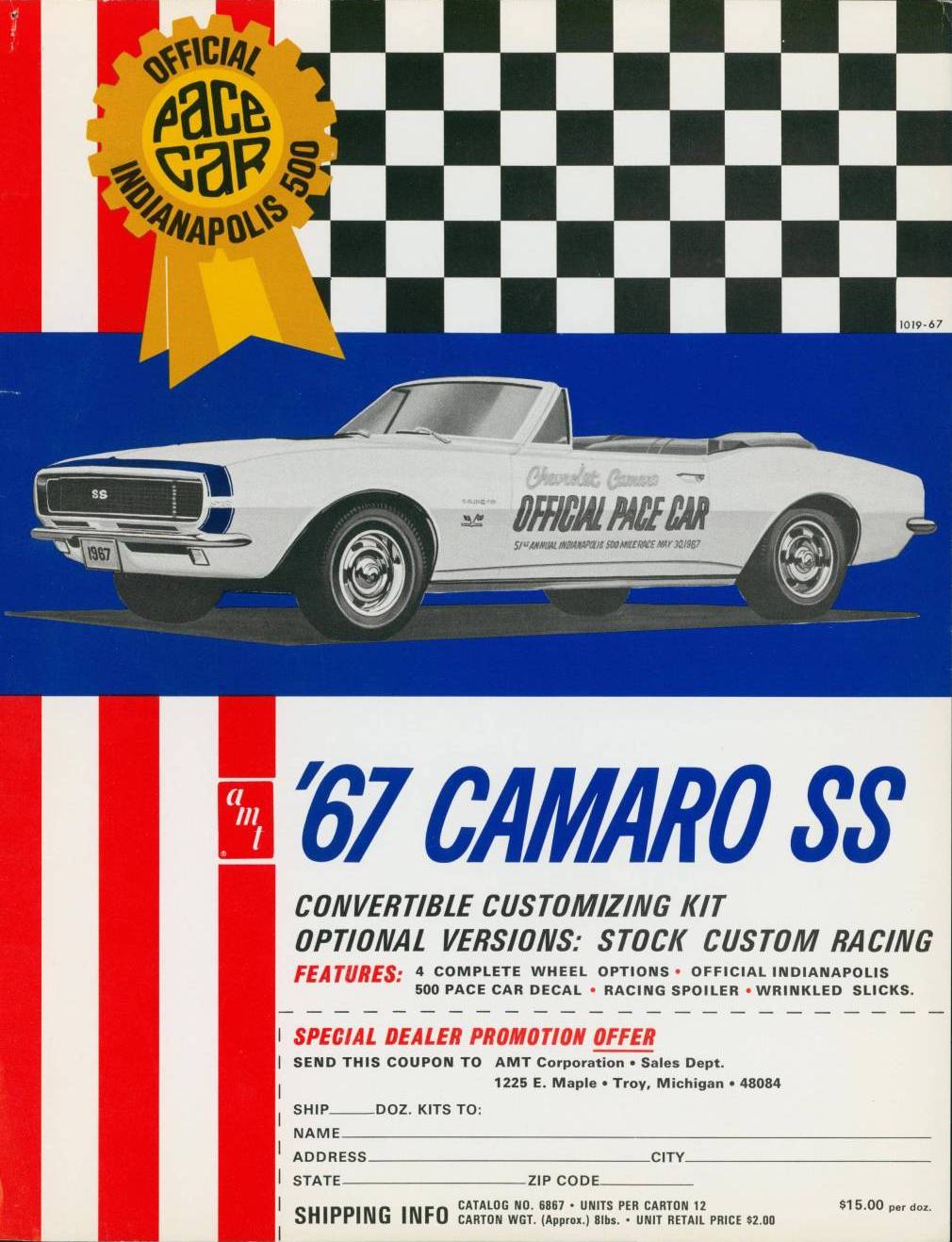
|
Based on data within the CRG database, total dealer-ordered replica production can be projected using a 40% to 50% survival rate:
Combining these figures with the estimated track fleet suggests a total production of 420 to 480 1967 Indy Pace Cars and replicas. While not an absolute number, this is a reasonable approximation based on surviving data.
After the RaceFollowing the conclusion of the race, members of the 500 Festival Committee were given the option to purchase their assigned Festival cars at a company car discount. All remaining event vehicles reverted to the Indianapolis zone office or to the local dealers that supplied them. The zone disposed of them as used cars after the race. Typically, they would be offered to dealers in the zone for showroom promotional purposes and as demonstrators. This distribution explains why a high concentration of surviving event cars remained within the Indiana and Ohio regions. Dan Young Chevrolet handled the retail sales for a significant portion of the retired pace car fleet. The dealership was later offered an additional car that had been used by the United States Auto Club (USAC); that vehicle turned out to be Car #92—one of the two actual track pace cars. It resides today in a private collection.
|
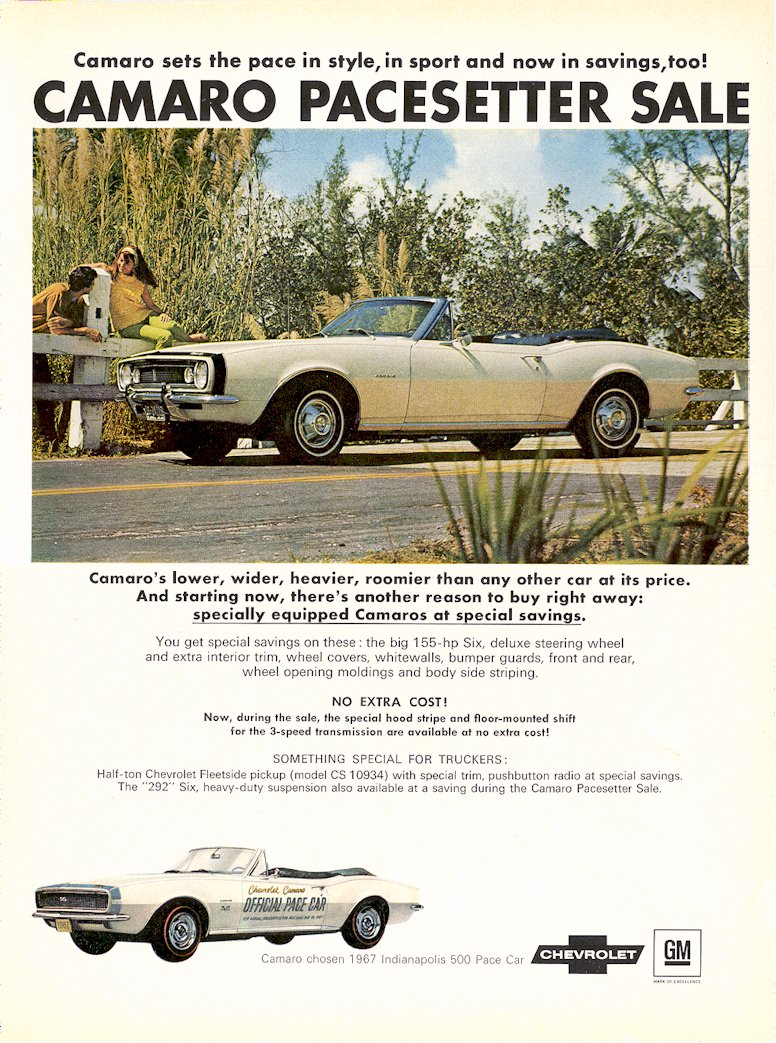
The nationwide "Camaro Pacesetter" sales campaign was a marketing program designed to capitalize on the Camaro's selection as the Indy 500 pace car. The Pacesetter promotion was strictly an appearance and value-driven sales campaign rather than a performance program. It was targeted primarily at L6 models. The only V8-powered Camaros involved in the promotion were those ordered with the M11 floor-shifted 3-speed manual transmission (upgraded from the standard steering column shifter) or the standalone D91 nose stripe.
"Chevrolet and its dealers are launching a nationwide Camaro Pacesetter sales campaign this month to mark the selection of the Camaro as pace car for this year's Indianapolis 500 race on Memorial Day."
"During the Pacesetter event, Camaro buyers can get the special hood stripe and floor-mounted shift for three-speed transmission at no extra cost with special savings also available on Powerglide automatic transmission, power steering and power brakes."
Details of the promotion can be reviewed here: 1967 Pacesetter Promotion
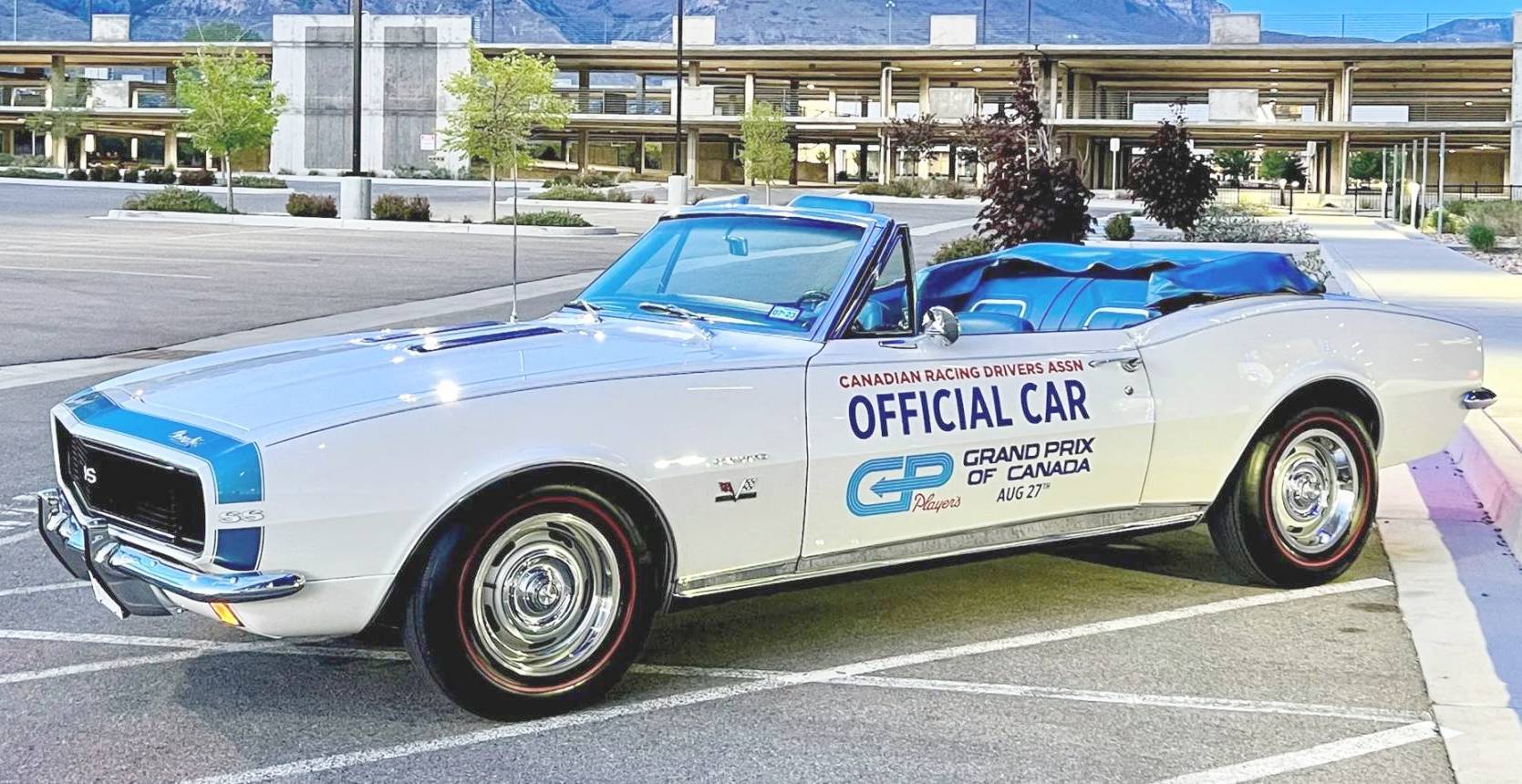
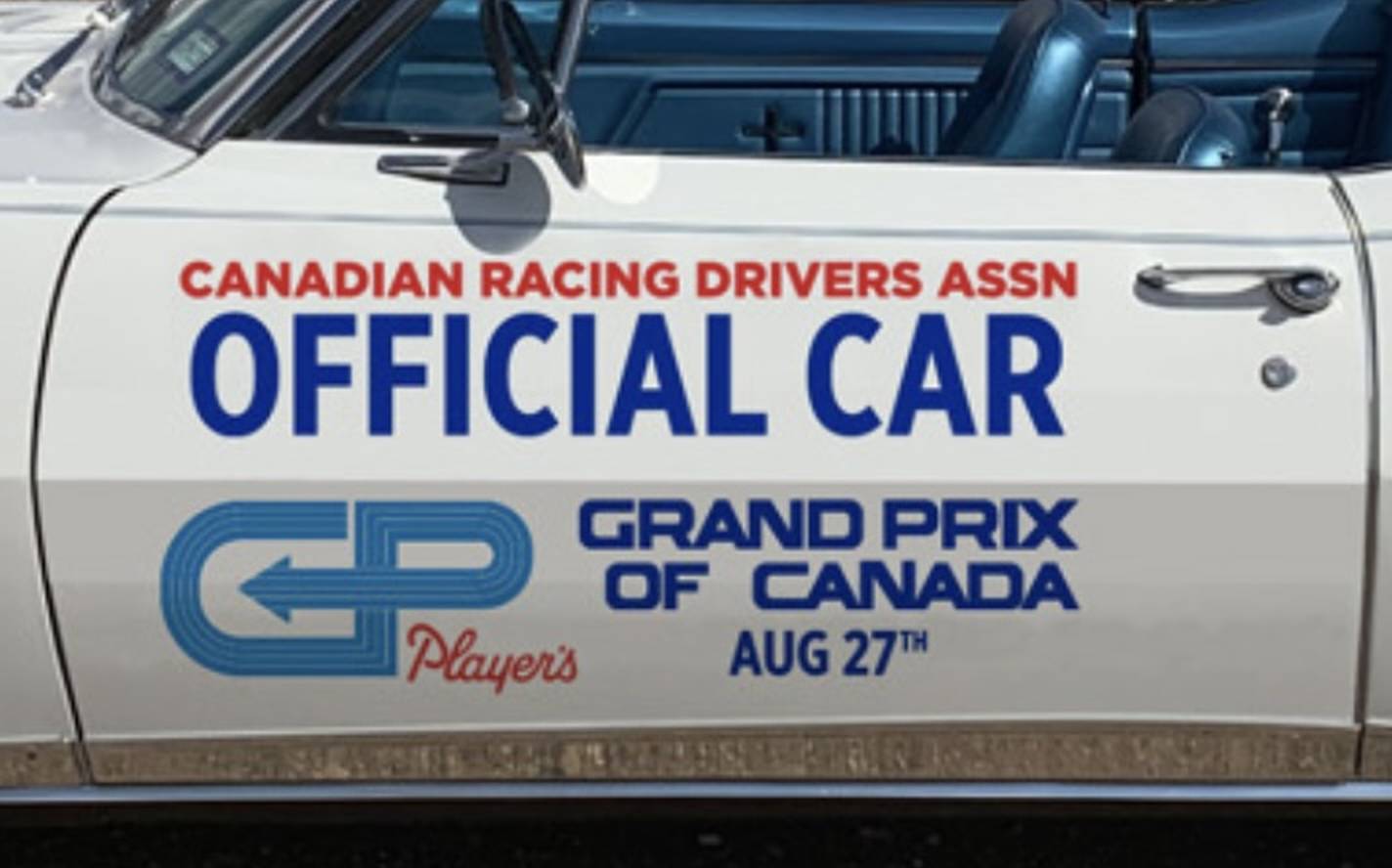
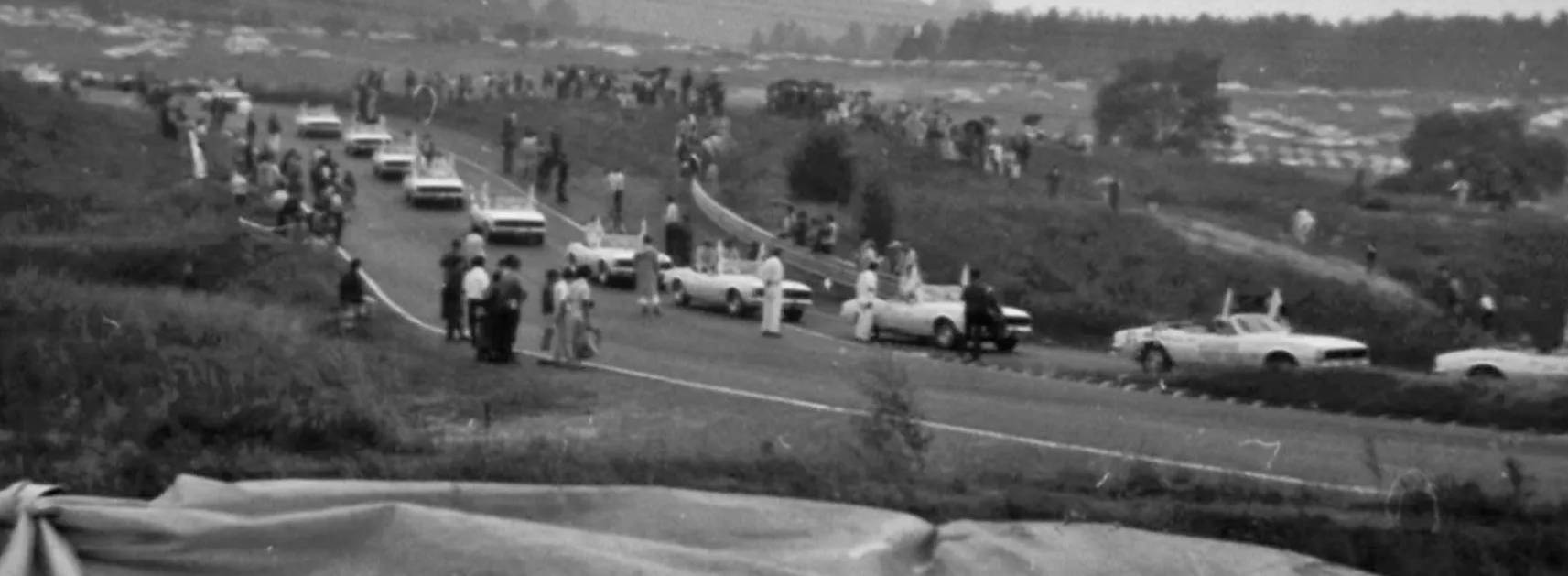
In June 1967, Chevrolet built 22 convertibles and shipped them to GM of Canada for use at the Canadian Grand Prix at Mosport. The cars were used for the pre-race drivers' parade and other supporting track activities; they did not pace the actual race. Because they share an identical color layout with the Indy Pace Cars, they caused confusion in the hobby until their purpose was eventually discerned. All the cars featured O-1 special paint and an F&SO code of -095C with a blue nose stripe and blue pinstripes.
|
|
Twelve of the Canadian cars were RS/SS396 cars (with black-painted tailpanels) with TH400 transmissions.Ten were RS 327 cars built using the base LF7 327ci V8 engine backed by a 2-speed Powerglide automatic transmission. Both variants had many options. The 327 cars shared a nearly identical option configuration with the big-block cars but omitted positraction, gauges, and disc brakes, while adding the D91 nose stripe, red-stripe tires, and wire wheel covers. The cars had the Grand Prix of Canada decals installed on the doors, and after the event, they were sold by Canadian dealers.
|
| Option Code | Big-Block 396 Variant | Small-Block 327 Variant |
|---|---|---|
| A39 | Deluxe Seat Belts | Deluxe Seat Belts |
| B37 | Floor Mats | Floor Mats |
| B93 | Door Edge Guards | Door Edge Guards |
| C06 | Power Top | Power Top |
| D55 | Console | Console |
| D91 | Included with SS | Front Accent Band (Nose Stripe) |
| F41 | Performance Suspension | Performance Suspension |
| G80 | Positraction Differential | - |
| J50 | Power Brakes | Power Brakes |
| J52 | Front Disc Brakes (incl rally wheels) | - |
| M40 / M35 | TH400 3-Speed Automatic | Powerglide 2-Speed Automatic |
| N34 / N30 | Wood-Grained Steering Wheel | Deluxe Steering Wheel |
| N40 | Power Steering | Power Steering |
| N44 | Special Steering Ratio | - |
| N61 | - | Deep Tone Dual Exhaust |
| PW6 | - | D70-14 Redline Tires |
| P02 | - | Simulated Wire Wheel Covers |
| U17 | Gauges | - |
| U25 | Trunk Lamp | Trunk Lamp |
| U26 | Underhood Lamp | Underhood Lamp |
| U28 | Ashtray Lamp | Ashtray Lamp |
| U35 | incl with Gauges | Electric Clock |
| U63 | AM Radio | AM Radio |
| V31 | Front Bumper Guard | Front Bumper Guard |
| V32 | Rear Bumper Guard | Rear Bumper Guard |
| Z22 | Rally Sport Package | Rally Sport Package |
| Z23 | Interior Decor Package | Interior Decor Package |
| Z87 | Deluxe Interior | Deluxe Interior |
This is a difficult topic to cover with certainty due to a lack of surviving factory records. Several primary resources proved invaluable in compiling this report:
If you have verifiable historical documentation, original vehicle documentation, or trim tag data that could expand this study, please contact one of the authors. Thank you to everyone who contributed records and insights to this project.
|


|